
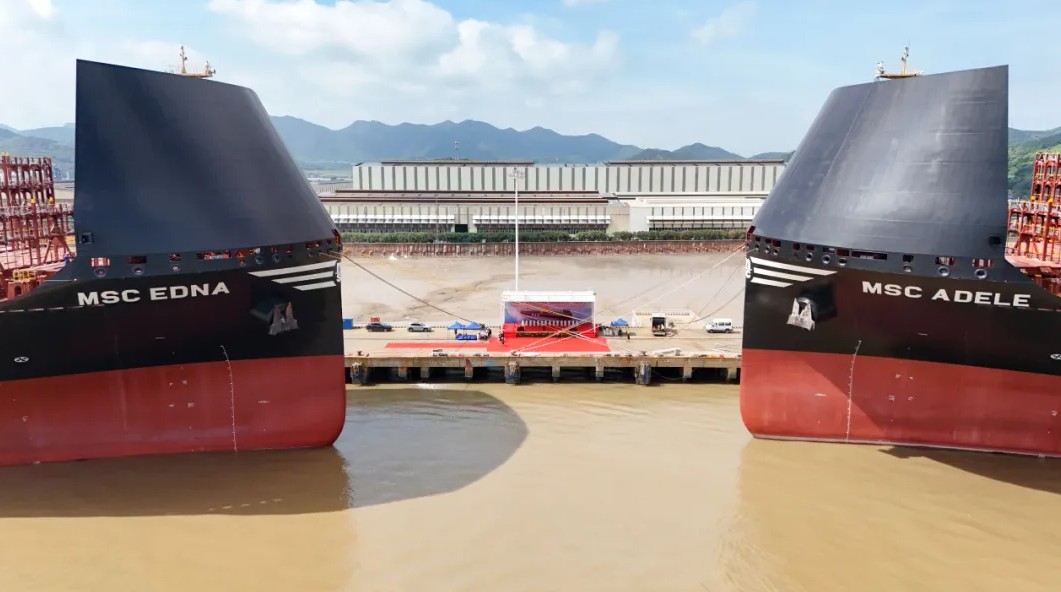
DNV said on Wednesday that a total of 14 new orders for alternative-fueled vessels were placed in September.
Of these orders, 12 were for LNG-fueled vessels, with six of these coming from the container segment, four from the bulk carrier segment, and two from the cruise segment.
The remaining two orders were for LPG carriers, DNV said.
Overall, 192 new orders for alternative-fueled vessels have been placed in the first nine months of 2025, representing a decline of 48 percent compared to the same period in 2024.
LNG-fueled vessels accounted for the majority of these orders (121), followed by 43 orders for methanol-fueled ships, with the remainder made up by LPG carriers (19), ammonia-fueled vessels (5), and hydrogen-fueled vessels, according to DNV.
New ordering in the alternative-fueled market continues to be dominated by the container segment, which has accounted for 63 percent of all new orders so far in 2025 (120 vessels).
During the first half of this year, there were orders for 87 LNG-fueled ships, totaling 14.2 million gross tonnes.
“Following a record-breaking first half of the year, zero new orders in August and relatively low activity in September signal a clear slowdown in the alternative-fueled market in the third quarter,” Jason Stefanatos, global decarbonization director at DNV Maritime, said.
“While this trend reflects a weaker overall newbuild market and rising contracting costs, other factors are also influencing sentiment,” he said.
“Uncertainties around the IMO’s net-zero framework, including lifecycle assessment factors for certain fuels, are prompting many owners to adopt a ‘wait and see’ approach to new orders. It is, therefore, essential that the industry receives greater regulatory clarity in the coming months,” Stefanatos said.
790 LNG-powered ships in operation
DNV’s platform shows that there are now 790 LNG-powered ships in operation and 631 LNG-fueled vessels on order.
Moreover, 209 LNG-powered containerships and 111 LNG-powered car carriers are in operation, followed by 81 crude carriers, and 76 oil/chemical tankers.
As per vessels on order, LNG-powered containerships account for a big part of the orders with 357 units. Shipping firms also ordered 111 car carriers, 45 crude oil tankers, and 41 oil and chemical tankers.
These statistics do not include smaller inland vessels or dual-fuel LNG carriers.
In the first half of 2025, 13 LNG bunkering vessels were ordered, compared to 62 in operation globally, with February marking the strongest month for this segment with eight orders, DNV previously said.
In addition to 1421 confirmed LNG-powered ships, the fleet powered by alternative fuels includes 437 methanol-fueled vessels, 294 LPG-powered ships, 43 hydrogen-fueled vessels, and 42 ammonia-fueled vessels.