
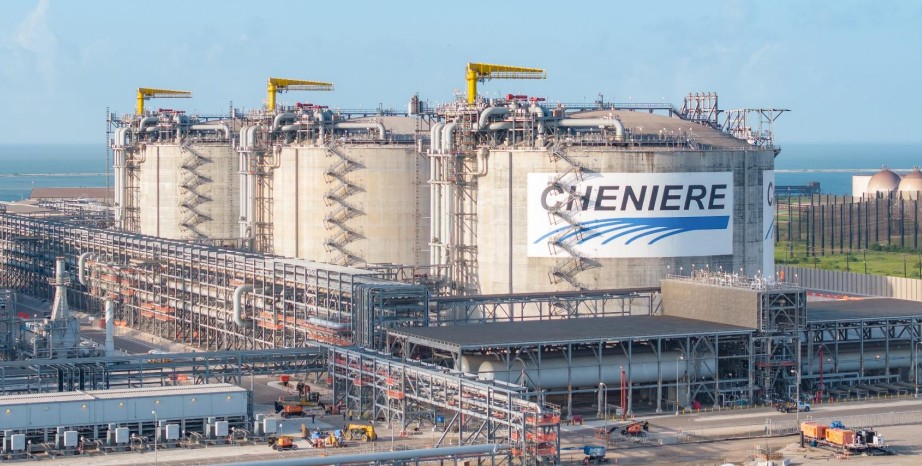
Cheniere’s Sabine Pass terminal in Louisiana currently produces more than 30 mtpa, while the Corpus Christi facility in Texas is able to produce more than 20 mtpa.
The company has an additional 11 mtpa under construction or in commissioning at Corpus Christi, with up to 24 mtpa expansion in development.
Cheniere also plans to add up to 20 mtpa capacity at the Sabine Pass facility.
Fusco said during Cheniere’s third-quarter earnings call on Thursday that the preliminary production forecast for 2026 has recently been completed, and aided by the startup of the remaining trains at Corpus Christi Stage 3.
In October, Cheniere achieved substantial completion of the third liquefaction train at the Corpus Christi Stage 3 expansion project.
The company also expects to achieve substantial completion of the fourth train by the end of this year, with the remaining three trains to follow next year.
Fusco expects 2026 to be another record year for LNG production.
“Our production forecast for 2026 accounts for the impact of strategically planned maintenance including certain downtimes designed to deploy engineering solutions at both facilities to bolster long-term production reliability and build additional resilience to those external forces, which can create production variability,” he said.
“With that said, with three mid-scale trains now commercially operable and together with the remaining four Stage 3 trains and no prolonged major maintenance planned, we’re looking forward to 2026 being our first year of producing over 50 million tonnes,” he said.
Up to 53 million tonnes
Zach Davis, Cheniere’s executive VP and CFO, provided further details regarding the expected production forecast for 2026.
“We expect to produce approximately 51 to 53 million tonnes of LNG in total across our two sites next year, up approximately 5 million tonnes year-over-year, inclusive of forecast Stage 3 volumes from Trains 4 through 7 and planned maintenance across both sites next year,” Davis said.
“While we expect the substantial completion of Trains 5 through 7 to occur across 2026, variability in this forecast is driven by the specific commissioning ramp-up and substantial completion timing as well as some general allowance for production variability year to year,” he said.
“Planned maintenance downtime to continue to bolster our resiliency long term across our platform in 2026 is of smaller scale compared to the major turnarounds we executed this year, supporting 2026 to be a record production year again for us,” Davis said.