
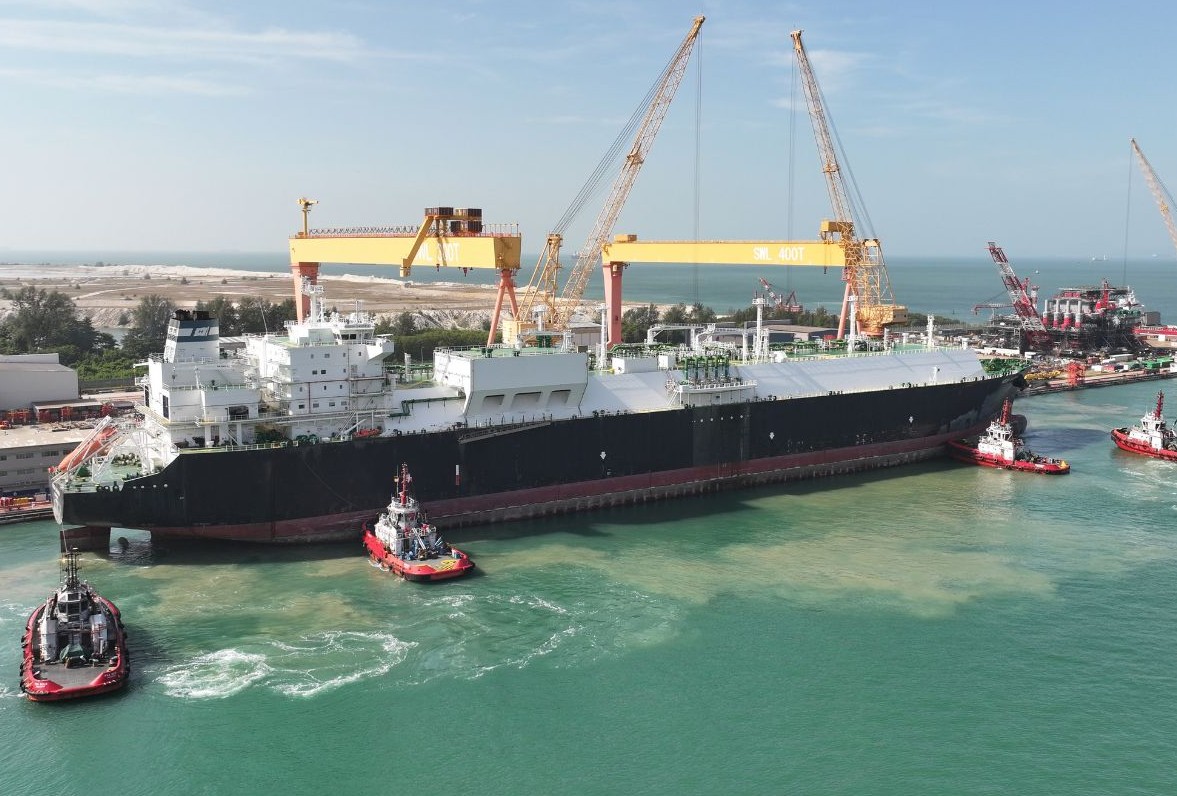
Hoegh Evi announced on Tuesday in a social media post that the 160,548-cbm Höegh Gandria, built in 2013, has arrived at the Seatrium shipyard in Singapore, where her conversion has begun.
“The conversion builds on Hoegh Evi’s proven track record of fast FSRU project execution and includes: engineering, installation of regasification systems, overall systems integration, commissioning, and a cosmetic refresh,” the company said.
When completed in the fourth quarter, the FSRU Hoegh Gandria will be ready to deliver up to 1,000 mmscf per day in regasification capacity, Hoegh Evi added.
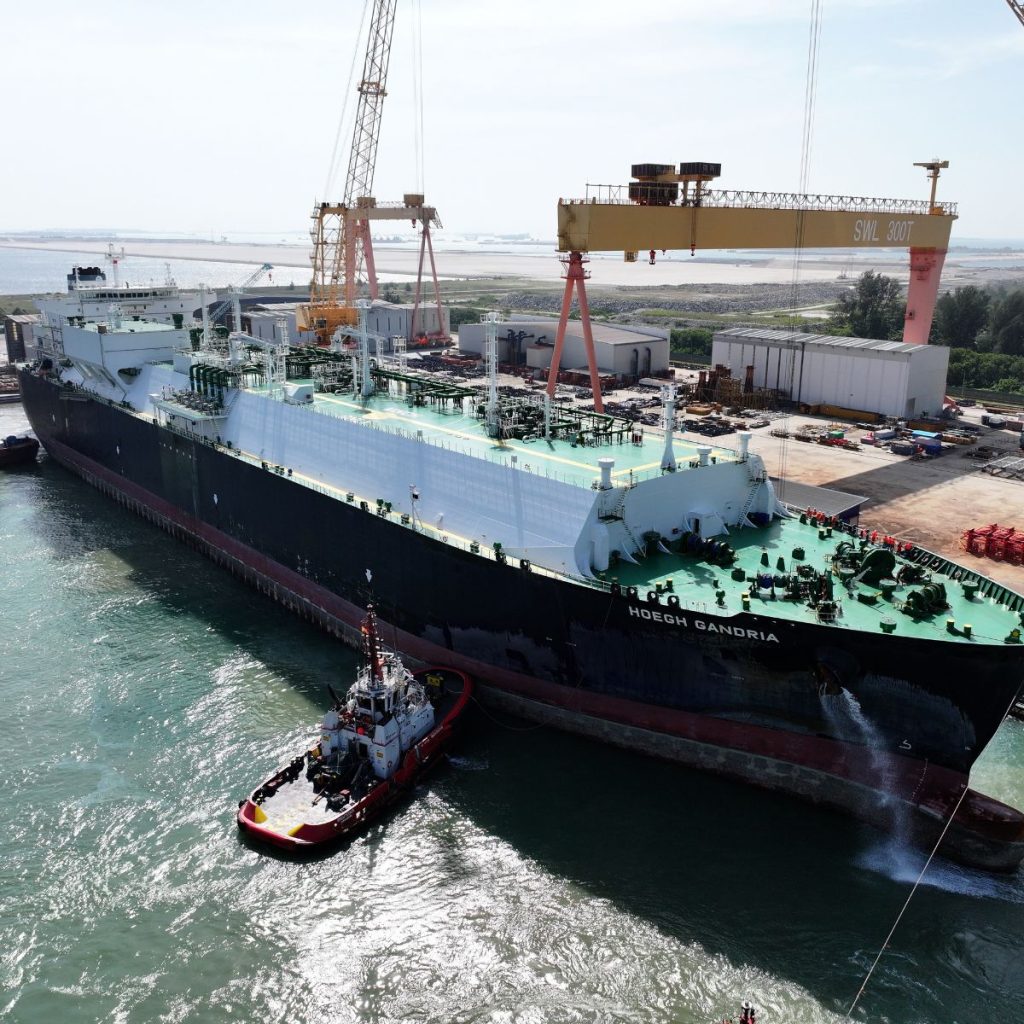
Last year, Seatrium secured the contract from Hoegh Evi to convert the LNG carrier into an FSRU.
In addition, Wartsila secured a contract from Hoegh Evi to supply a regasification module, which will be installed onboard the LNG carrier Hoegh Gandria.
When completed, the FSRU will be deployed to the LNG terminal in Port of Sumed, Egypt under a charter agreement between Hoegh Evi and Egypt Natural Gas Holding Company (EGAS).
The charter is for 10 years.
In 2023, the company, previously known as Hoegh LNG, bought this 2013-built LNG carrier from CoolCo for about $184.3 million, saying the acquisition provides flexibility to pursue FSRU conversion opportunities.
In Egypt, the unit will replace the FSRU Hoegh Galleon, which was deployed to Egypt in July 2024, on an interim charter from Australian Industrial Energy (AIE) and Hoegh Evi.
According to Hoegh Evi, Galleon will remain in Egypt for up to an additional year before deployment to AIE’s LNG terminal in Port Kembla, Australia in 2027.