
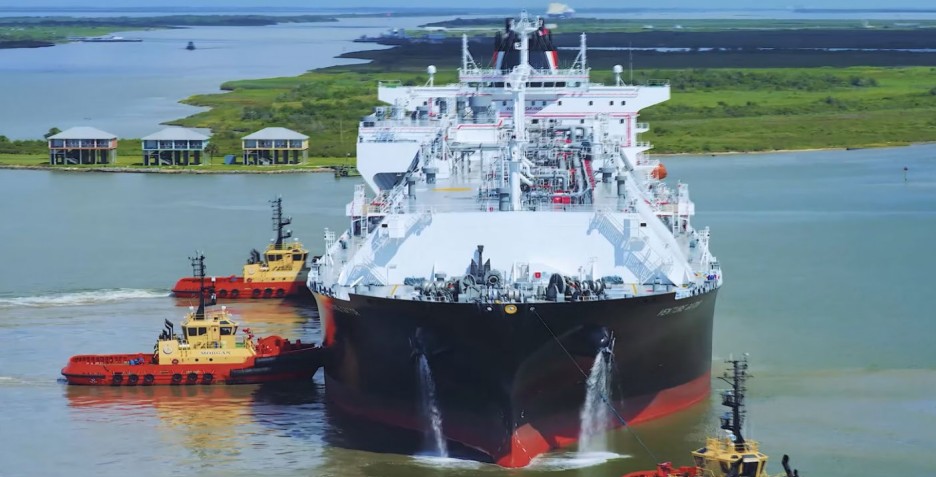
EIA said in its weekly natural gas storage report that the LNG-carrying capacity of vessels departing US ports was 133 Bcf, down 15 Bcf from the previous week.
Cheniere’s Sabine Pass plant shipped ten LNG cargoes, and the company’s Corpus Christi facility sent six shipments during the week ending March 11, according to the report.
Moreover, Venture Global LNG’s Plaquemines terminal sent seven cargoes, and the Freeport LNG facility and Sempra Infrastructure’s Cameron LNG terminal each shipped four cargoes.
Venture Global’s Calcasieu Pass facility shipped three cargoes, and the Elba Island facility sent two cargoes.
The Cove Point LNG facility did not ship LNG during the week under review.
Henry Hub climbs
EIA reported that the Henry Hub spot price increased by 26 cents/MMBtu from $2.89/MMBtu last Wednesday to $3.15/MMBtu this Wednesday.
According to the agency, total US demand for natural gas decreased by 10 percent (12.1 billion cubic feet per day [Bcf/d]) compared with the previous report week, according to LSEG Data, led by a 27 percent (8.3 Bcf/d) decrease in the residential and commercial sectors.
Warmer temperatures this week across the US have helped to moderate seasonal natural gas demand for space heating, the agency said.
Prices at Henry Hub have been between $2.89/MMBtu and $3.30/MMBtu since mid-February, as winter price volatility has declined heading into early spring, it said.
TTF averaged $17.56/MMBtu
EIA said that the price at the Dutch Title Transfer Facility in Europe averaged $17.56/MMBtu, $3.04 higher than the previous week.
Moreover, the Japan-Korea Marker price averaged $15.87/MMBtu.
This is $2.76 higher than the previous week, EIA said.
EIA noted that LNG vessel traffic through the Strait of Hormuz, through which approximately 20 percent of global LNG flows, has been disrupted.
QatarEnergy declared force majeure on LNG exports last Wednesday after a drone strike hit its export terminal in Ras Laffan, reducing global cargo availability.