
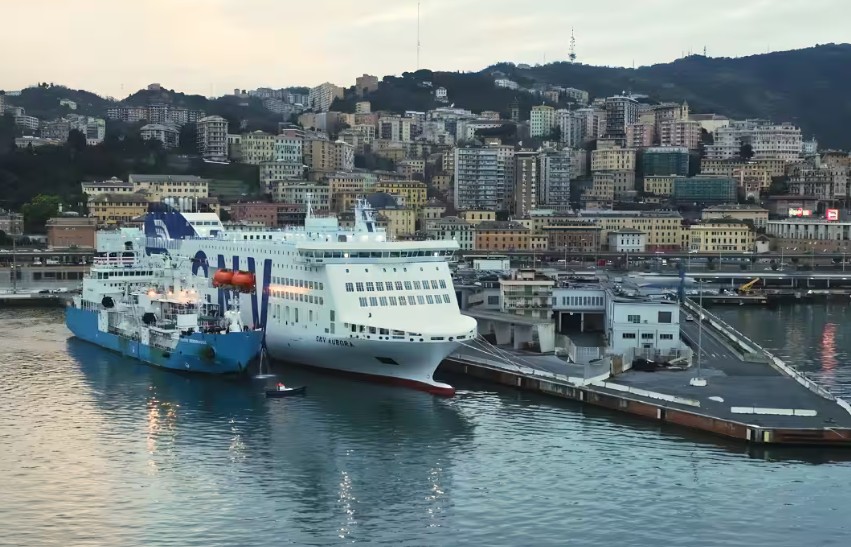
According to a statement released last week by GNV, the company joined forces with the Italian unit of Switzerland-based Axpo, as it did for its first LNG-powered newbuild, GNV Virgo, in December last year.
The Axpo-chartered and NYK-owned 5,200-cbm bunkering vessel, Green Zeebrugge, delivered LNG fuel to GNV Aurora during the maiden operation.
GNV noted that this bunkering operation took place within a complex geopolitical context, characterized by widespread volatility in energy markets and across-the-board increases in fuel prices, affecting all types of fuel.
In December last year, Axpo and GNV, supported by the Maritime Authority of Genoa, completed what they say is Italy’s first ship-to-ship bio-LNG bunkering operation at the port of Genoa.
The operation saw 500 cbm of bio-LNG transferred to GNV Virgo, enough to fuel the vessel’s return voyage to Palermo.
Since December, LNG bunkering operations have been repeated weekly, both day and night, at various berths to meet the vessel’s route and port call schedule requirements, GNV said.
With the refueling of the sister ship GNV Aurora, GNV said it has taken another step forward.
More vessels
GNV Aurora is the second vessel in the GNV fleet powered by LNG and the fourth in the first series of new ships commissioned from Guangzhou Shipyard International (GSI) in China.
It is equipped for shore power (cold ironing) and, thanks to the use of LNG and the solutions adopted, will enable a reduction in CO₂ emissions of up to 50 percent per transportable cargo compared to previous-generation vessels, according to GNV.
The ship, which is 218 meters long and has a tonnage of 52,300 tons, can accommodate over 1,700 passengers in more than 420 cabins and carry up to 2,770 linear meters of cargo.
It is worth noting that GNV also ordered four new LNG-powered ropax ships from GSI last year.
This new order, combined with the previous one, will allow the company to expand its fleet with eight new units between 2025 and 2030.
Work will begin in 2026, with the first ship delivered within the first months of 2028 and the following ones every six months, according to GNV.