
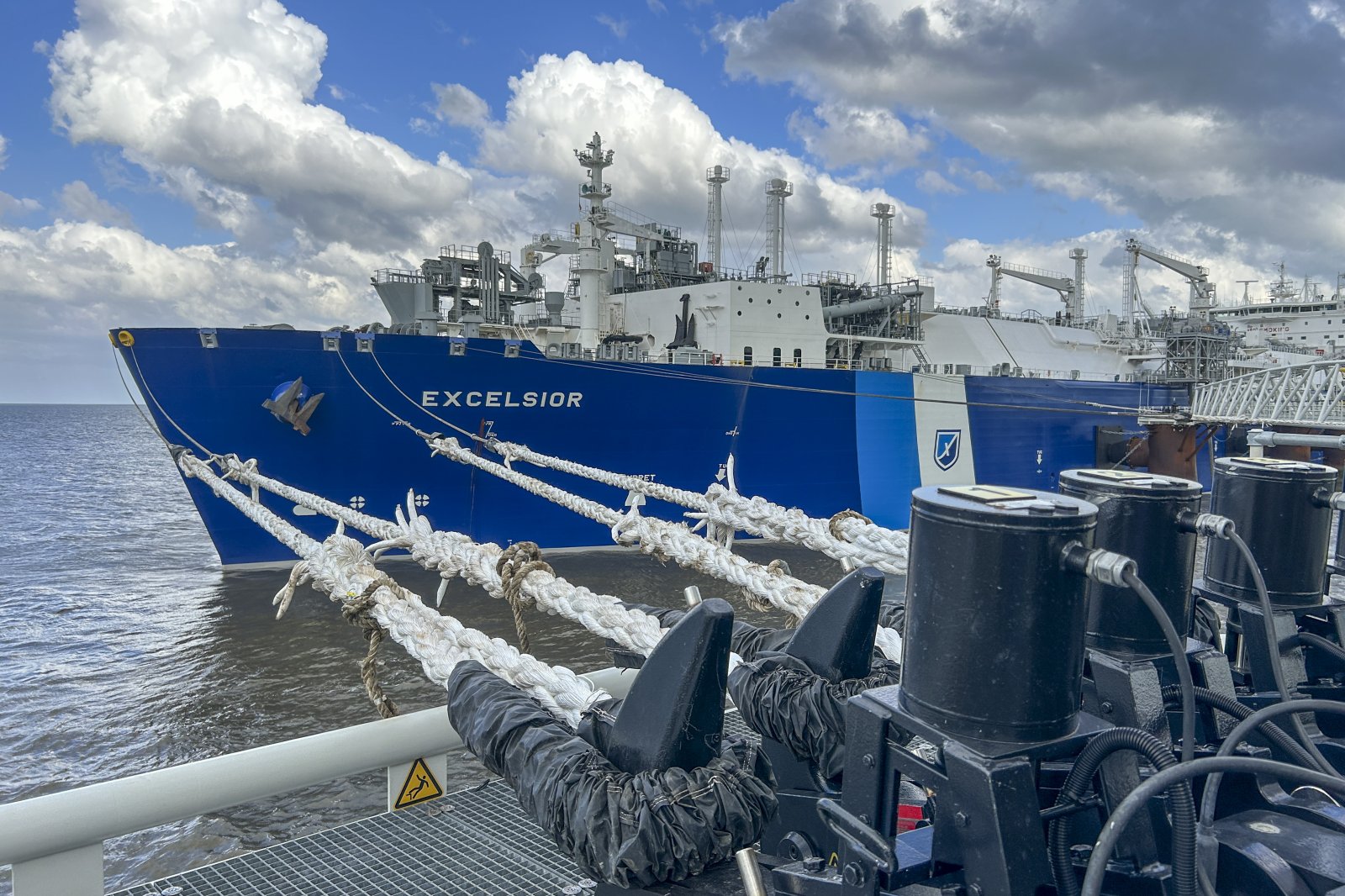
Gasfin said in a statement that the new role at the LNG terminals in Brunsbuttel, Wilhelmshaven 1, and Wilhelmshaven 2 is effective as of April 1.
With this step, Gasfin is expanding its role in terminal operations.
In addition to technical and operations management, Gasfin now also assumes responsibility for the commercial steering of terminal processes – from LNG deliveries to entry into the gas grid, the company said.
Gasfin said the focus of commercial management is the coordination across all terminal interfaces.
“What may sound abstract at first is, in practice, a core element of terminal operations. With our team, we ensure 24/7 that booked capacities are turned into reliable gas deliveries,” says Danny van Schie, managing director of Gasfin Services.
Gasfin’s key responsibilities include the planning and coordination of LNG deliveries, alignment with capacity holders, terminal operators, and grid operators, as well as terminal capacity management.
This is complemented by the monitoring of delivery volumes and gas quality, as well as gas accounting and billing, the company added.
Regas volumes rising
State-owned German LNG terminal operator Deutsche Energy Terminal (DET) has set a new record with its regasified volumes in the first quarter of this year.
DET said on Tuesday that its three chartered FSRUs delivered more than 25 terawatt-hours (TWh) of natural gas into the German grid during the period.
This is a 2.5-fold increase compared to the previous year’s figure (10 TWh; Q1 2025) and corresponds to around 10 percent of Germany’s total natural gas storage capacity, according to DET.
After three years of operation, DET now employs specialists from over 18 countries at its sites in Brunsbuttel, Stade, and Wilhelmshaven, as well as at its headquarters in Dusseldorf.
Last year, the federal government’s subsidiary fed 79 TWh into the grid via its FSRU-based facilities, significantly higher than the figures for the two previous years (59 TWh each).
This follows the commissioning of its second Wilhelmshaven FSRU-based facility in May last year.
DET also said that it continues to work on the Stade FSRU project and the construction of a new jetty at the Brunsbuttel Elbe port.
In November 2025, DET announced that the Stade FSRU-based terminal would not go into operation before the second quarter of 2026, after it assumed responsibility for the superstructure from Hanseatic Energy Hub.
In March 2024, the 2021-built 174,000-cbm FSRU, Energos Force, owned by Apollo’s Energos Infrastructure and chartered by Germany’s federal government, arrived at the AVG jetty in Stade.
However, DET terminated the contract related to the Stade FSRU-based facility with compatriot Hanseatic Energy Hub, the developer of the onshore LNG terminal in Stade, in March last year.
DET also sub-chartered Energos Force for deployment in Jordan.