
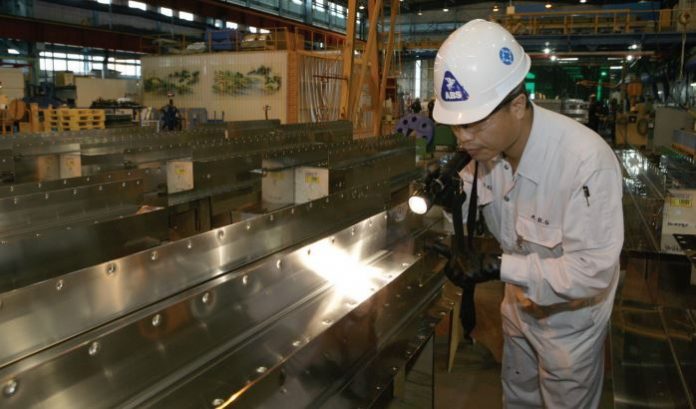
Classification society ABS said it has granted a design approval for a project which looks to adapt technology developed for use in space to maritime LNG fuel tanks.
The approval marks a “key milestone” in the SpaceTech4Sea project, which sees ABS, OceanFinance and Cimarron Composites joining forces to adapt composite technologies developed for the space industry to shipping, ABS said in a statement.
The project has received funding of about $1.2 million from the European Union.
It explores whether composite technology, which is lighter and potentially more cost-effective, offers a competitive alternative to marine LNG fuel tanks, principally for small, short sea shipping applications where weight is an issue.
“Ultra-lightweight” LNG fuel tanks
ABS design approval means the next step is a physical vessel installation of the technology which had previously received approval in principle from ABS in September 2019.
The project partners aim to create ultra-lightweight LNG fuel tanks which will attract both new buildings and LNG fuel retrofits by cutting costs, reducing weight and increasing vessels’ capacity, according to ABS.
Although the technology can have a wide range of applications, the SpaceTech4Sea project focuses initially on high-speed vessels with small LNG fuel tank capacities.
The technology offers weight savings of up to 80 percent over existing equivalent LNG tank designs, ABS said. It also introduces space technology safety standards to marine operations.
Application on a vessel
“We have been excited about the potential of this technology to reduce barriers to the utilization of LNG as fuel for some time and now it has further underlined that potential by meeting a series of exacting standards,” said Patrick Ryan, ABS senior VP, global engineering and technology.
He added that the next challenge includes supporting its safe application on a vessel.
“Some new rocket propulsion concepts use liquid methane as a fuel. The advances in liquid methane transport can serve as a steppingstone toward liquid hydrogen transport,” said Tom DeLay, Cimarron’s CEO.
“LNG as marine fuel will face a rapid expansion in the very near future. In the EU particularly, the combination of development of an adequate number of refueling points and the availability of funding resources, e.g., EU Recovery Fund, are expected to attract a lot of interest for LNG-propelled projects,” said Ocean Finance CEO, Panayotis Zacharioudakis.