
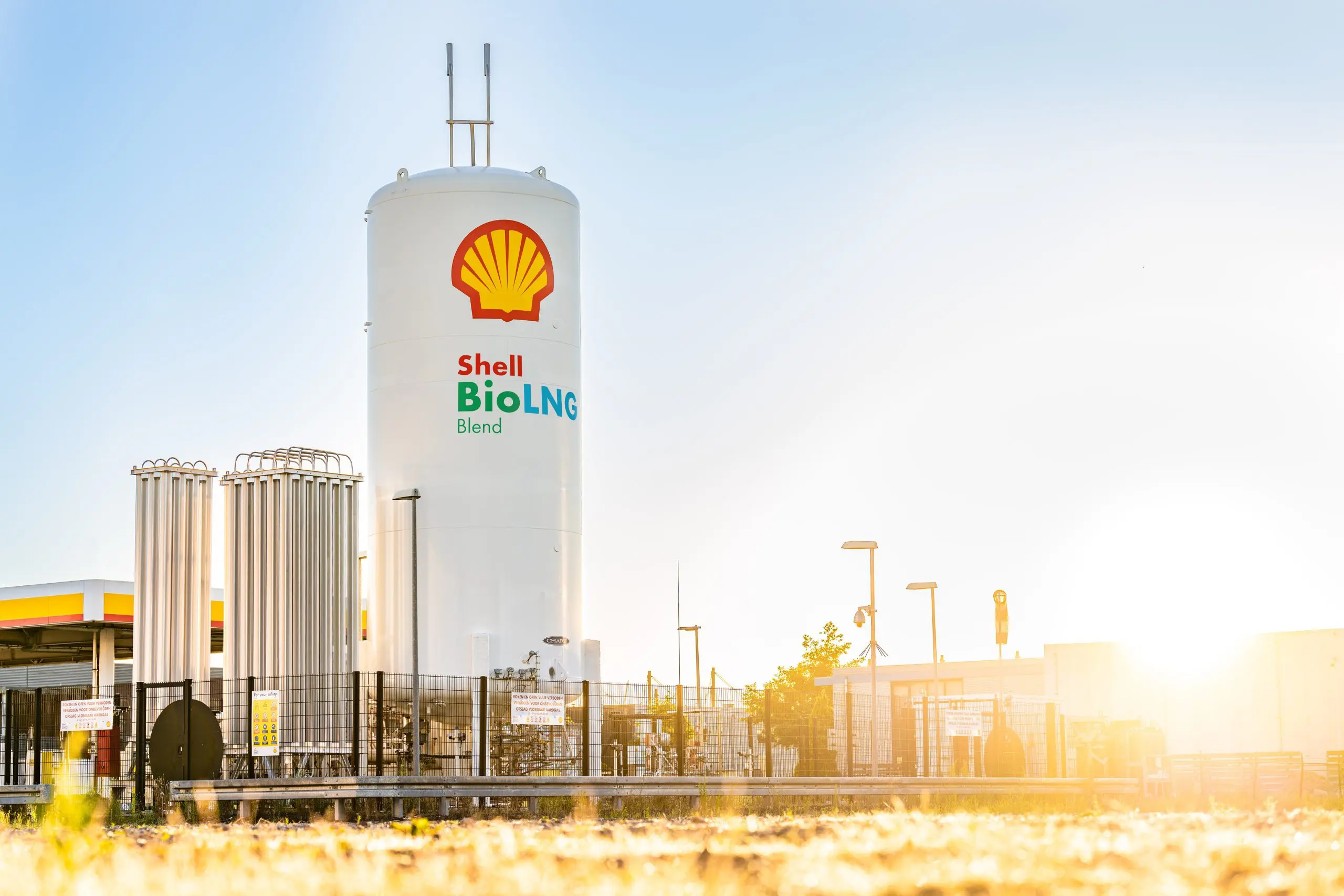
Germany-based chemicals firm Evonik has joined forces with Shell to slash emissions in the heavy-duty road transport sector with bio-LNG.
According to a statement by Evonik, Shell is supplying 100 tons of bio-LNG made from agricultural waste to the firm, equivalent to the average fuel consumption of three trucks in a year.
Evonik said in the statement it passes on this volume of bio-LNG from Shell to selected logistics partners.
“With this initiative, both companies want to promote the use of biomethane in heavy-duty transport as a fuel alternative that emits significantly less emissions and is already available today,” it said.
Bio-LNG can reduce CO2e emissions by about 86 percent compared to diesel and thus contribute to reaching the EU’s 2030 climate targets, the firm said.
Evonik lowering emissions
The joint action by Evonik and Shell is part of an initiative that the chemicals company launched in January.
Evonik said it aims to lower the group’s indirect CO2e emissions from the transportation of raw materials and finished products.
The firm plans to achieve this through increased cooperation with selected logistics partners that use trucks running on bio-LNG.
Already today, 10 percent of Evonik’s truck transports for packed goods in Europe are shipped in “climate-friendly” trucks.
The chemicals company has set a goal of increasing this share of packed goods in Germany to 20 percent by 2025, it said.
Shell’s bio-LNG business on the rise
In February, Shell became the first in the Netherlands to offer bio-LNG to all of its customers, following the launch of Nordsol’s facility in Amsterdam Westpoort.
Nordsol, Shell and Renewi officially launched the first Dutch bio-LNG plant in October last year.
Shell started offering bio-LNG blended with “regular LNG” to all of its customers.
After gearing up production Shell plans to offer pure bio-LNG to its entire LNG network in the Netherlands within a few years, giving its customers reduction of CO2 emissions by approximately 30 percent.
Furthermore, the company plans to offer a blend of bio-LNG to its entire LNG network in Germany by the third quarter of 2023.
Shell is currently building a bio-LNG plant located at its Rheinland refinery near the German city of Cologne.
The firm started building what it says is the largest bio-LNG production plant in Germany in February this year. It recently received three LNG tanks.
Moreover, the new plant will have a capacity of about 100,000 tons and will supply bio-LNG to Shell’s large network of LNG filling stations in the country.
According to Shell, the quantities produced in the plant can cover the annual needs of around 4000 to 5000 LNG-powered trucks, opening up the possibility of saving up to a million tons of CO2 per year compared to conventional diesel trucks.