
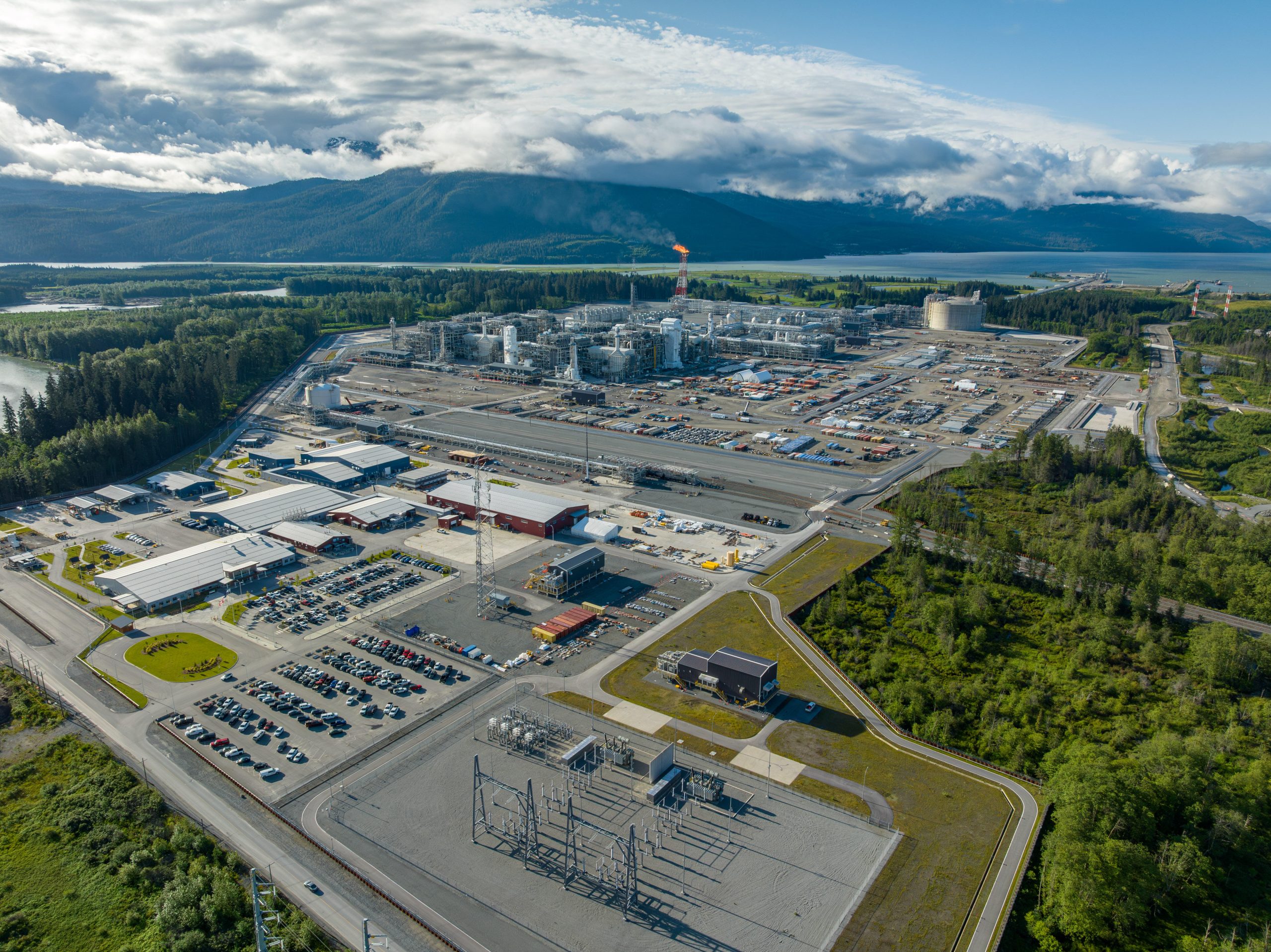
JGC said in a statement on Monday that Train 2, including all construction areas of the LNG Canada project, was handed over on December 1.
LNG Canada is a joint venture comprised of Shell (40 percent), Petronas (25 percent), PetroChina (15 percent), Mitsubishi (15 percent), and Kogas (5 percent).
JGC noted that the LNG Canada facility comprises a natural gas receiving and liquefaction plant, a marine terminal capable of accommodating LNG carriers, a tugboat dock, LNG loading lines, LNG processing units, storage tanks, a rail yard, a water treatment facility, and flare stacks.
Located on Canada’s west coast, the LNG Canada facility benefits from access to abundant natural gas and an ice-free harbor.
The plant is the first of its kind in Canada, with an annual production capacity of up to 14 million tonnes of LNG.
Following on from the first phase, JGC and Fluo are currently carrying out the front-end engineering and design (FEED) update services for the second phase of the expansion plan, JGC said.
With a proposed Phase 2 expansion, Shell and its partners plan to double the terminal’s capacity to 28 mtpa.
Shell and its partners started production at the first liquefaction train on June 22.
Last month, the partners launched the second liquefaction train.
Canadian Prime Minister Mark Carney recently named the planned second phase of the export project as one of the major projects the federal government would help fast-track.
LNG Canada has also sought approval from the Canadian energy regulator to increase its annual export capacity by 6.4 percent.