
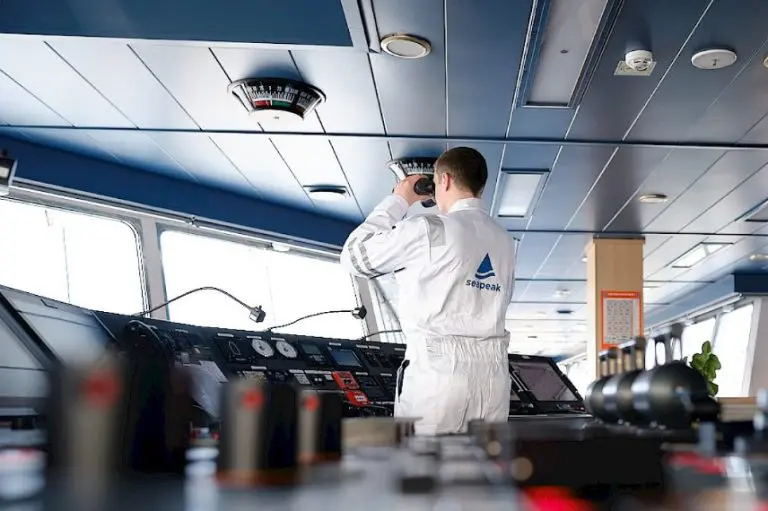
Sepeak said in its results report that the restructuring charges primarily relate to “anticipated severance costs resulting from the dismissal of substantially all of the company’s Spanish seafarers.”
“This severance follows the company’s decision to restructure the operations of the four steam turbine LNG carriers, which comprise its Spanish fleet, due to the adverse market conditions affecting steam turbine LNG carriers,” Seapeak said in its results report.
As of June 30, 2025, Seapaeak’s LNG carrier fleet included seven steam turbine LNG carriers, the oldest vessels in its LNG fleet.
To reduce the company’s operating costs, three of these vessels were placed in lay-up in early 2025.
As of June 30, these vessels were presented as held for sale in the company’s consolidated balance sheet, according to Seapeak.
Seapeak said it booked decreases of $14.4 million and $32.5 million for the three and six months ended June 30 in net voyage revenues due to the lay-up of the 2002-built 137,814-cbm Seapeak Hispania, the 2003-built 135,423-cbm, Seapeak Catalunya, and the 2004-built 135,423-cbm, Seapeak Madrid, and lower short-term charter rates earned following the scheduled completion of their previous charter contracts.
Besides these 52 percent-owned LNG carriers, Seapeak has one wholly-owned LNG carrier, which is expected to complete its long-term charter contract in December 2025, it said.
Oversupply of LNG carriers
The company noted that LNG project delays have caused a near-term oversupply of LNG carriers.
“As a result, our results for 2025 and beyond may be negatively impacted to the extent that there are periods within 2025 or subsequent years that we have LNG carriers without charter contracts or we have rechartered our LNG carriers at rates lower than they earned on their prior charter contracts,” the company said.
Last year, the company announced in its 2023 report that it was pursuing various opportunities related to six of its LNG carriers which are scheduled to complete their charter contracts between June 2024 and June 2025.
The six LNG carriers are Seapeak Hispania, Seapeak Catalunya, Seapeak Madrid, Seapeak Vancouver, Seapeak Methane, and Seapeak Magellan.
Sepeak revealed in March that it plans to sell its three steam LNG carriers that were placed in layup in early 2025.
50 LNG carriers
Teekay LNG Partners rebranded as Seapeak in 2022 following the completion of its $6.2 billion merger deal with New York-based private equity firm Stonepeak Infrastructure Partners.
As of June 30, Seapeak’s LNG fleet included 50 LNG carriers, the report shows.
This includes five LNG carriers under construction and one LNG regasification terminal in Bahrain.
Seapeak’s interest in these vessels ranges from 20 percent to 100 percent.