
Shanghai Cosco Shipping LNG Investment, a unit of CSET, will take a 50 percent stake in each of the six shipowning entities established by MOL in Liberia, according to a stock exchange filling.
CSET said the vessels, which have a capacity of 271,000 cbm, will be built by China’s Hudong-Zhonghua.
The firm said the total investment in the LNG carriers will be about 14.95 billion yuan ($1.96 billion), while each shipowning entity will contribute about 3.8 billion yuan.
CSET said that the entities will sign long-term charter contracts with QatarEnergy.
LNG Prime was the first to report on October 30 that QataEnergy is expected to sign charter and operation agreements soon for six QC-Max LNG carriers it recently ordered in China,
In September, QatarEnergy ordered six additional 271,000-cbm LNG carriers from CSSC’s Hudong-Zhonghua for about $2 billion, boosting the total to 24 QC-Max LNG carriers.
Hudong-Zhonghua will deliver the ships between 2028 and 2031.
Shipbuilding sources said at the time that Qatari LNG shipping giant Nakilat and a joint venture of China’s Cosco Shipping and Japan’s MOL were shortlisted for chartering and operating these six vessels.
According to the sources, Cosco and MOL are expected to sign the charter contracts this week.
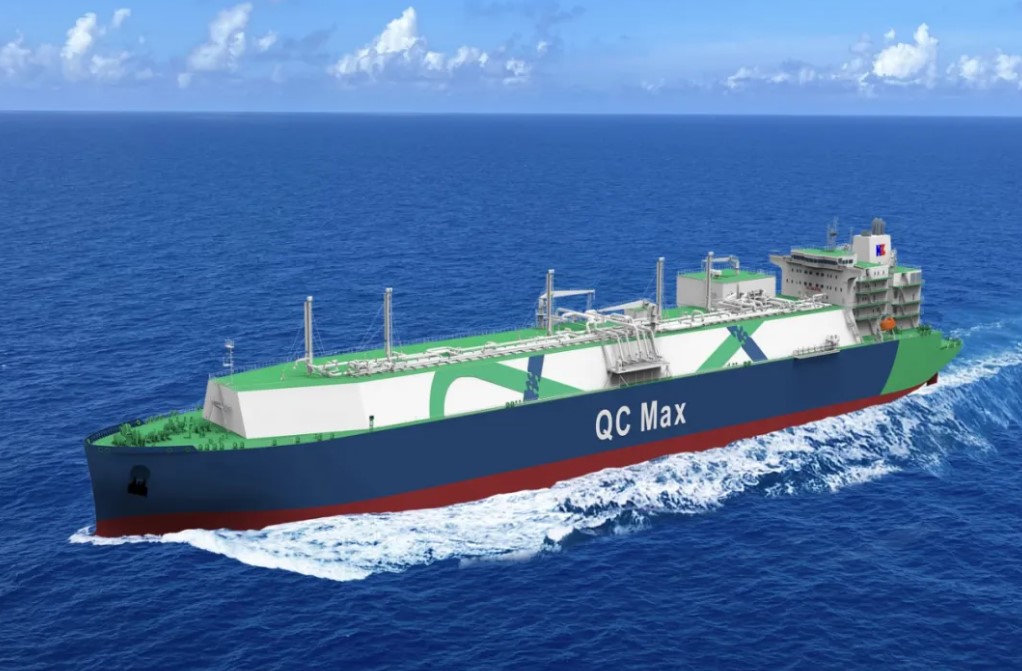
QC-Max
Each of the world’s largest LNG vessels will be 344 meters long, 53.6 meters wide, and will have a draft of 12 meters.
The QC-Max vessels also feature WinGD dual-fuel propulsion, a reliquefaction system, an air lubrication system, and GTT’s NO96 Super+ containment tech. They have five storage tanks.
QatarEnergy previously signed long-term time charter party (TCP) agreements with four shipowners for the operation of 18 QC-Max vessels.
The company signed a charter deal with compatriot shipping firm Nakilat for nine LNG carriers.
Moreover, affiliates of China Merchants Group, Shandong Marine Group, and China LNG Shipping, of which Cosco Shipping Energy Transportation holds 50 percent, will operate nine of these vessels.
CMES will operate four vessels, Shandong Marine Energy three, and CLNG two.
Currently, the world’s largest LNG carriers are Qatar’s Q-Max vessels, which are about 345 meters long and have a capacity of 263,000-266,000 cbm.
Nakilat owns 14 Q-Max LNG carriers built by Hanwha Ocean (DSME) and Samsung Heavy between 2008 and 2010.
They all transport LNG from the giant Ras Laffan LNG complex in Qatar to customers around the globe.