
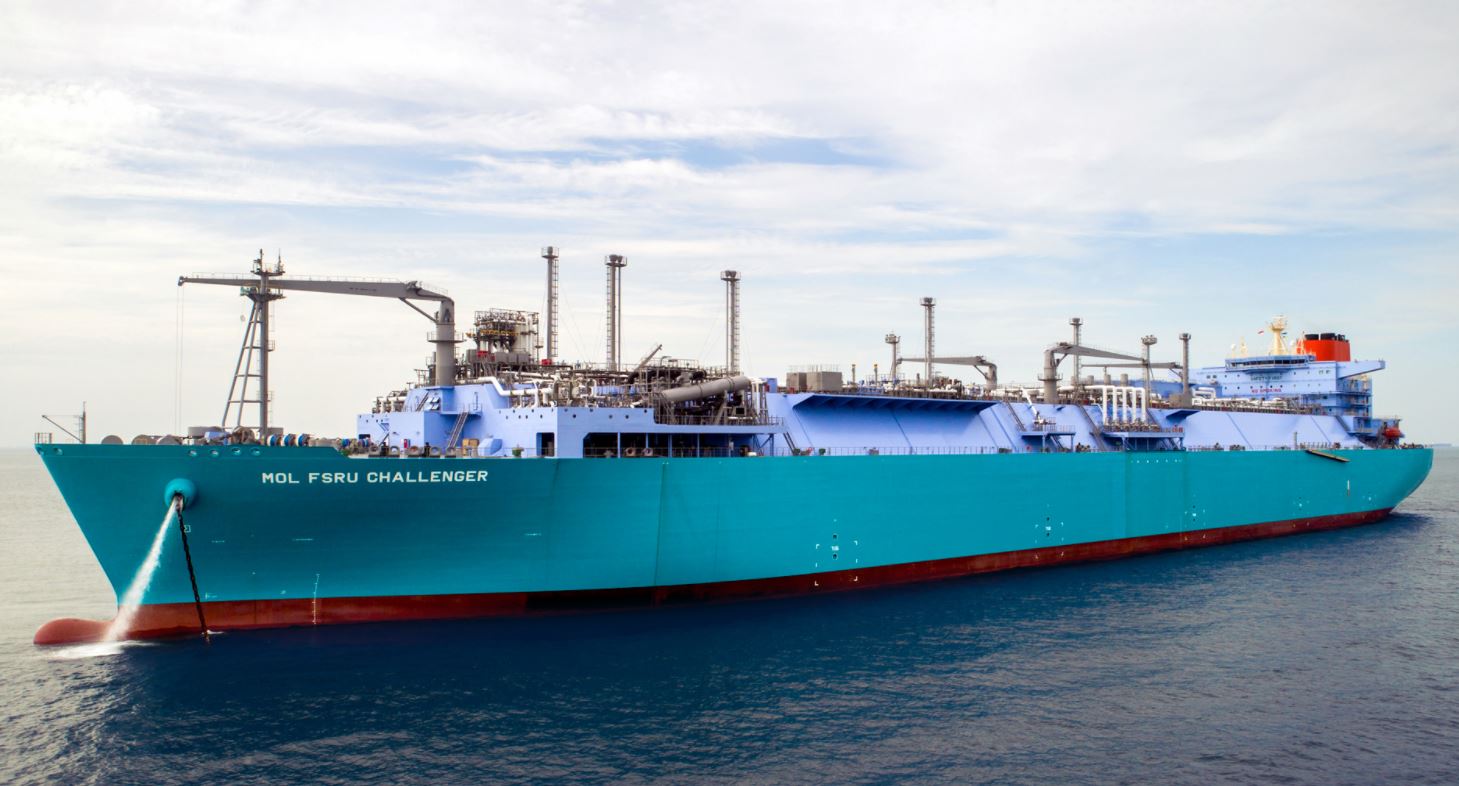
Power firm HK Electric is expecting to launch commercial operations at Hong Kong’s first LNG import terminal, which includes the world’s largest FSRU, in mid-2023.
Hong Kong LNG Terminal, a joint venture consisting of HK Electric and Castle Peak Power, is developing the project.
Besides the 263,000-cbm MOL FSRU Challenger, to be renamed Bauhinia Spirit, the project features a double berth jetty.
The project forms part of Hong Kong’s initiative to reduce emissions. The city and special administrative region of China aims to replace about half of its power generation fuel with natural gas.
Regasified LNG coming from the FSRU will supply two power plants via subsea pipelines.
These include the Black Point power station located in the New Territories and Lamma power station located at Lamma Island.
Also, Shell will supply LNG as part of a long-term deal signed with the two utilities in 2019.
Commercial launch in mid-2023
HK Electric said in March last year that it expected to commission the facility in 2022.
However, the Covid-19 pandemic delayed the launch of the project.
A spokesperson for HK Electric told LNG Prime on Monday that, despite all the difficulties and unexpected circumstances caused by the pandemic, the shop fabrication and associated offshore installation of the jetty topside structure and equipment have been completed.
Also, work continues on hook-up and pre-commissioning of the jetty topside equipment.
Following completion of the work, the chartered FSRU will then arrive to complete the commissioning phase before the facility goes in full operation.
“We are working closely with MOL to ensure timely arrival of the FSRU to Hong Kong for the commissioning phase of the terminal,” the spokesperson said.
According to the spokesperson, HK Electric expects the terminal to go into commercial operation in mid-2023.
“Once commissioned, the facility will provide us with greater access to natural gas at competitive prices and enhance our LNG supply reliability,” the spokesperson said.
FSRU in Singapore
According to its AIS data provided by VesselsValue, the FSRU was on Monday still located at the Singapore LNG import terminal.
The unit now has a larger regasification capacity following completion of upgrade works at Keppel Shipyard in Singapore.
Previously, the vessel had a nominal capacity of 540 million cubic feet per day, with a maximum capacity of 720 million cubic feet per day.
Following the upgrade, this increased to nominal 600 million cubic feet per day with a maximum capacity of 800 million cubic feet per day, Japan’s MOL said in a recent update.
This modification not only contributes to regasification capacity, but also increases equipment redundancy, enabling more stable operation and energy supply, MOL said.
To remind, MOL and Dutch Vopak signed a deal in 2021 to jointly own the giant FSRU which will serve the new LNG terminal in Hong Kong.
Under the deal, Vopak will buy 49.99 percent of the shares from MOL in the vessel owning company of the 2017-built, 345 meters long FSRU.
MOL and Vopak will provide the FSRU as well as jetty operations and maintenance and port services to the LNG import project.
The two firms also joined forces for the development of the project’s jetty and maintenance services.