
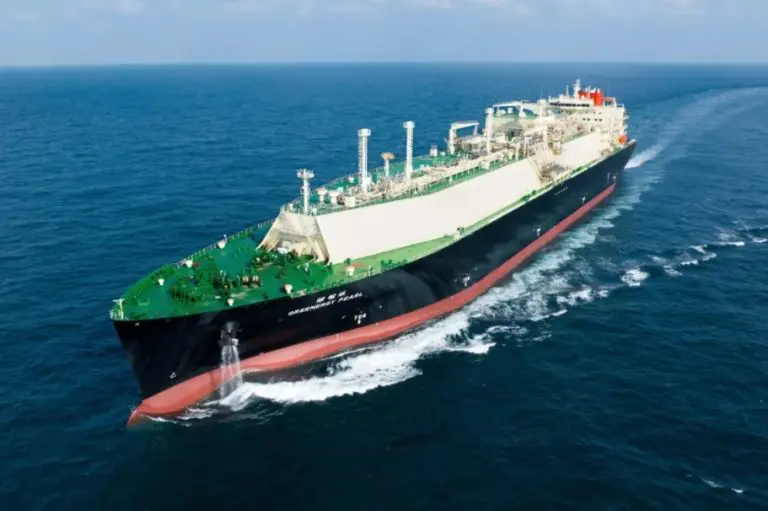
The Japanese shipping firm revealed this in its results report on Friday.
This is six more LNG carriers than in the previous quarter and nine more LNG carriers than in the first quarter of 2024.
In the prior quarter, MOL said it expects to have 106 LNG carriers in its fleet by the end of March 2025, adding two vessels from the earlier estimate.
However, the company now added two more vessels and expects to have 108 LNG carriers in its fleet by the end of March 2025.
This includes LNG carriers owned and/or operated by joint venture companies.
Also, MOL previously said that it had about 30 LNG carriers on order.
As of December 31, 2024, MOL’s fleet included seven FSUs/FSRUs, three LNG bunkering vessels, one LNG powership, and six ethane carriers.
In October 2024, Singapore LNG, the state-owned operator of the country’s first LNG import terminal on Jurong Island, signed a deal with MOL to charter one FSRU for Singapore’s second LNG terminal.
MOL ordered this 200,000-cbm FSRU at Hanwha Ocean for about $413 million.
Earlier in 2024, MOL also signed an FSRU charter deal with Poland’s Gaz-System for the planned LNG import terminal in Gdansk.
MOL booked this FSRU order at HD Hyundai Heavy for about $364 million
As part of its plans to reduce emissions, MOL has also set a target to operate 90 LNG-powered and methanol-fueled vessels by 2030.
LNG earnings “stable”
MOL reported revenue of 1,318.6 billion yen in the April-December period of fiscal 2024, up 8.2 percent from the year before, while operating profit of 122.3 billion yen rose 52.7 percent.
The company’s energy business, which includes the liquefied gas segment, reported revenue of 402.4 billion yen and profit of 81.74billion yen, both up compared to the year before.
MOL said its LNG carrier business “continued to generate stable profit through existing long-term charter contracts and the delivery of new vessels, but reported a year-on-year decrease in profit.”
The LNG infrastructure business reported increased profit year-on-year as a result of the start of new projects and the “stable” operation of existing projects, MOL said.
MOL said the LNG carrier business will “maintain stable profit as a result of the continuation of long-term charter contracts and the delivery of new vessels slated to enter service under new
contracts.2
Also, the LNG infrastructure business is expected to make a “stable profit through the stable operation of existing projects,” it said.