
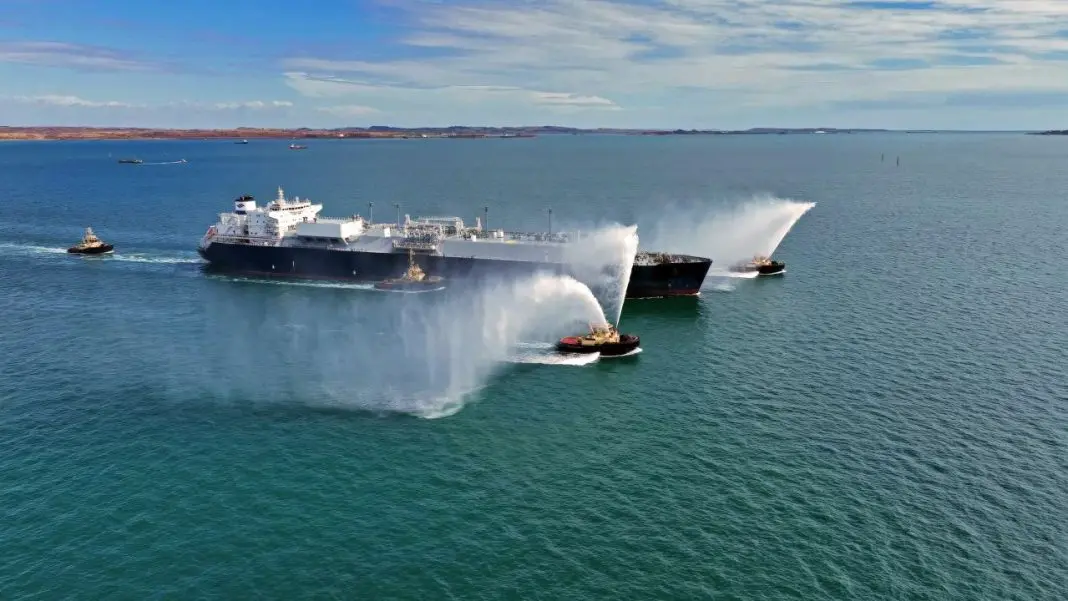
The spokesperson said that Woodside is executing its plan to resume normal production following Ex-Tropical Cyclone Narelle.
“Our priority is the safety of our people, the environment, and our assets,” the spokesperson said.
Woodside said it remains committed to supporting Western Australia’s energy security through the supply of domestic gas to the state.
“Production continues at Macedon and Pluto, and Woodside is continuing to supply domestic gas to our Western Australian customers from available capacity,” the spokesperson said.
“With the Port of Dampier now reopened, ship loading at Pluto LNG is recommencing, demonstrating the reliability of Western Australian LNG supply to customers amid current global supply constraints,” the spokesperson said.
Woodside’s Pluto LNG terminal, which shipped its 1,000th LNG cargo in April last year, currently has one operational train with a capacity of 4.9 mtpa.
The liquefaction train gets gas from the offshore Pluto and Xena gas fields via a 180 km trunkline.
Pluto LNG is underpinned by long-term sales agreements with Kansai Electric and EIG’s MidOcean Energy, each holding a 5 percent interest in the project.
In November 2021, Woodside took a final investment decision on the Scarborough and Pluto LNG Train 2 developments.
Bechtel started building the second Pluto train in 2022.
Woodside expects to ship the first LNG cargo from the $12.5 billion Scarborough project in Western Australia in the fourth quarter of this year.
NWS LNG
“Following the production interruption at our Karratha gas plant due to the cyclone, we are remobilising our offshore workforce,” the spokesperson said.
The Karratha gas plant is part of the Woodside-operated North West Shelf project.
The NWS project has supplied energy to Australian and international customers since the 1980’s.
Last year, Woodside completed the permanent retirement of the second LNG train at its NWS LNG terminal due to declining natural gas supplies.
This resulted in a reduction of the Karratha gas plant’s capacity from 16.9 million tonnes per annum (mtpa) to 14.3 mtpa.
Including the retired train, the plant has five LNG trains, launched between 1989 and 2008, and most of these volumes supply customers in Japan.
The facility also has domestic gas trains, condensate stabilization units, and LPG units.