
Wartsila said in a statement on Thursday the conversions are intended to reduce greenhouse gas emissions by lowering methane slip in support of Chevron Shipping’s broader efforts to reduce the carbon intensity of its operations.
This marine industry first was made possible after two years of collaboration between the companies, Wartsila said.
Wartsila booked the order for the first two vessels in the third quarter of 2024.
Methane slip
LNG, when burned as a fuel, results in small amounts of methane that may not fully combust leading to methane escaping into the atmosphere, referred to as methane slip.
Methane exists in the atmosphere for a shorter time than CO₂ but traps about 25–30 times more heat over a 100-year period, Wartsila said.
Addressing methane emissions is a key part of lowering carbon intensity.
Wartsila’s 50DF to SG conversion project is designed to modify the engines in service to operate as SG, using spark ignition versus diesel pilot fuel to initiate combustion.
According to Wartsila, this enables a more optimized combustion process, thereby reducing the methane slip and improving efficiency.
“Chevron Shipping aims to reduce methane emissions intensity of our LNG fleet in support of a lower carbon future,” said Barbara Pickering, president of Chevron Shipping.
“We are pleased to collaborate with Wartsila in this industry first. This demonstrates steps we are taking to reduce the carbon intensity of marine transportation,” Pickering said.
Reliquefaction units, sails
Earlier this year, South Korea’s HD Hyundai Marine Solution secured a contract from US energy giant Chevron to install reliquefaction units and other tech on the latter’s two LNG carriers.
A reliquefaction unit reliquefies BOG generated during the operation of LNG cargo tanks, either returning the gas to the cargo tank or preventing natural evaporation using sub-cooled LNG.
In addition to reliquefaction units, the unit of HD Hyundai, previously known as Hyundai Global Service, will also install air lubrication technology and new gas compressors.
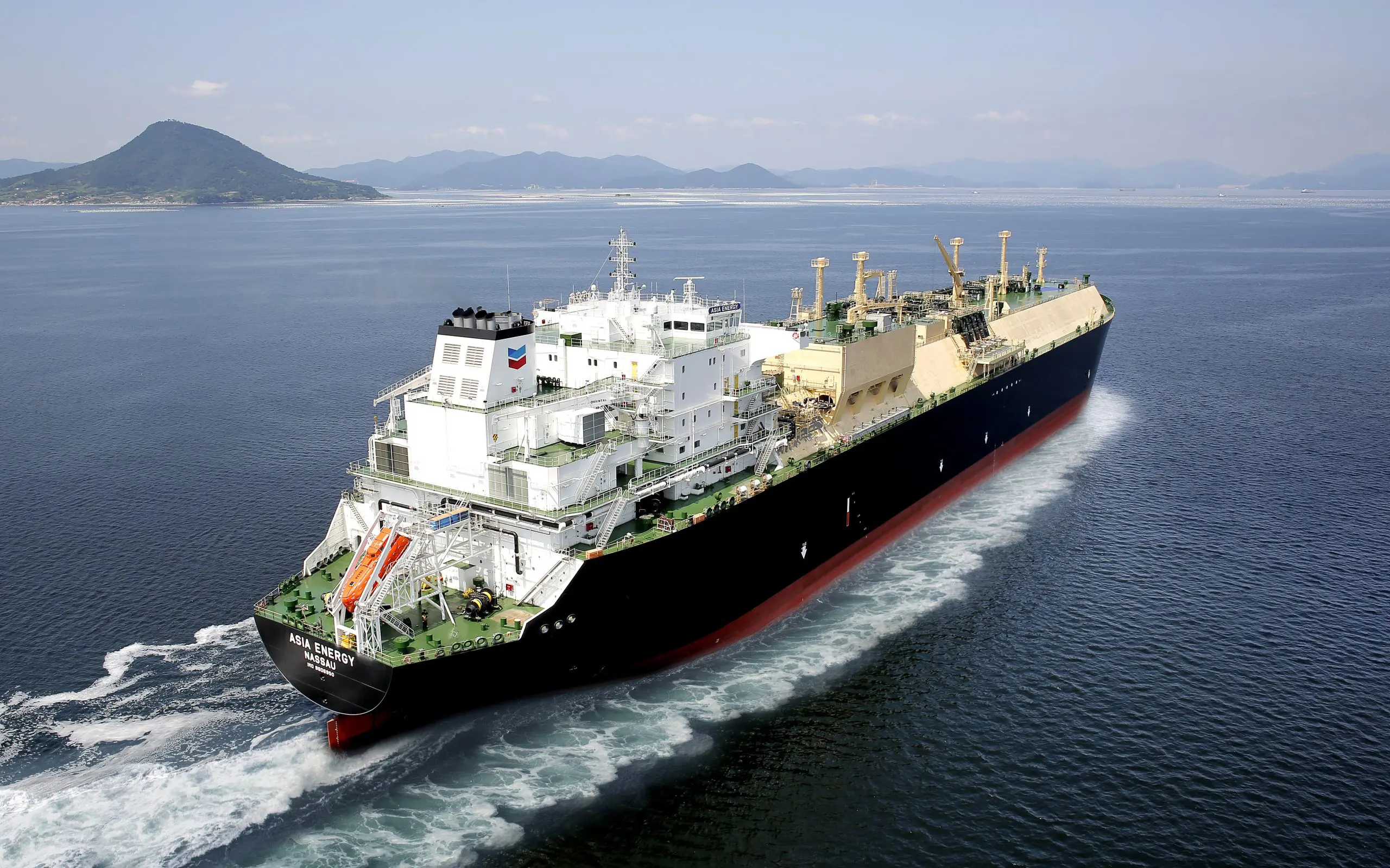
HD Hyundai Marine said that the 2014-built 160,000-cbm, Asia Energy, is one of the two LNG carriers which will receive the upgrade.
Besides this move, Japan’s shipping firm MOL and Chevron Shipping recently joined forces on what they say is the world’s first LNG carrier equipped with wind-assisted ship propulsion systems.
MOL and Chevron Shipping entered into a deal to install Wind Challenger, a hard sail wind-assisted ship propulsion system developed by MOL and Oshima Shipbuilding, to a newbuild LNG carrier.
Moreover, this vessel is under long-term charter from MOL’s unit MOL Encean to Chevron Asia Pacific Shipping.
South Korea’s Hanwha Ocean is building the LNG carrier at its Geoje yard, and the vessel is scheduled for delivery in 2026, according to MOL.