
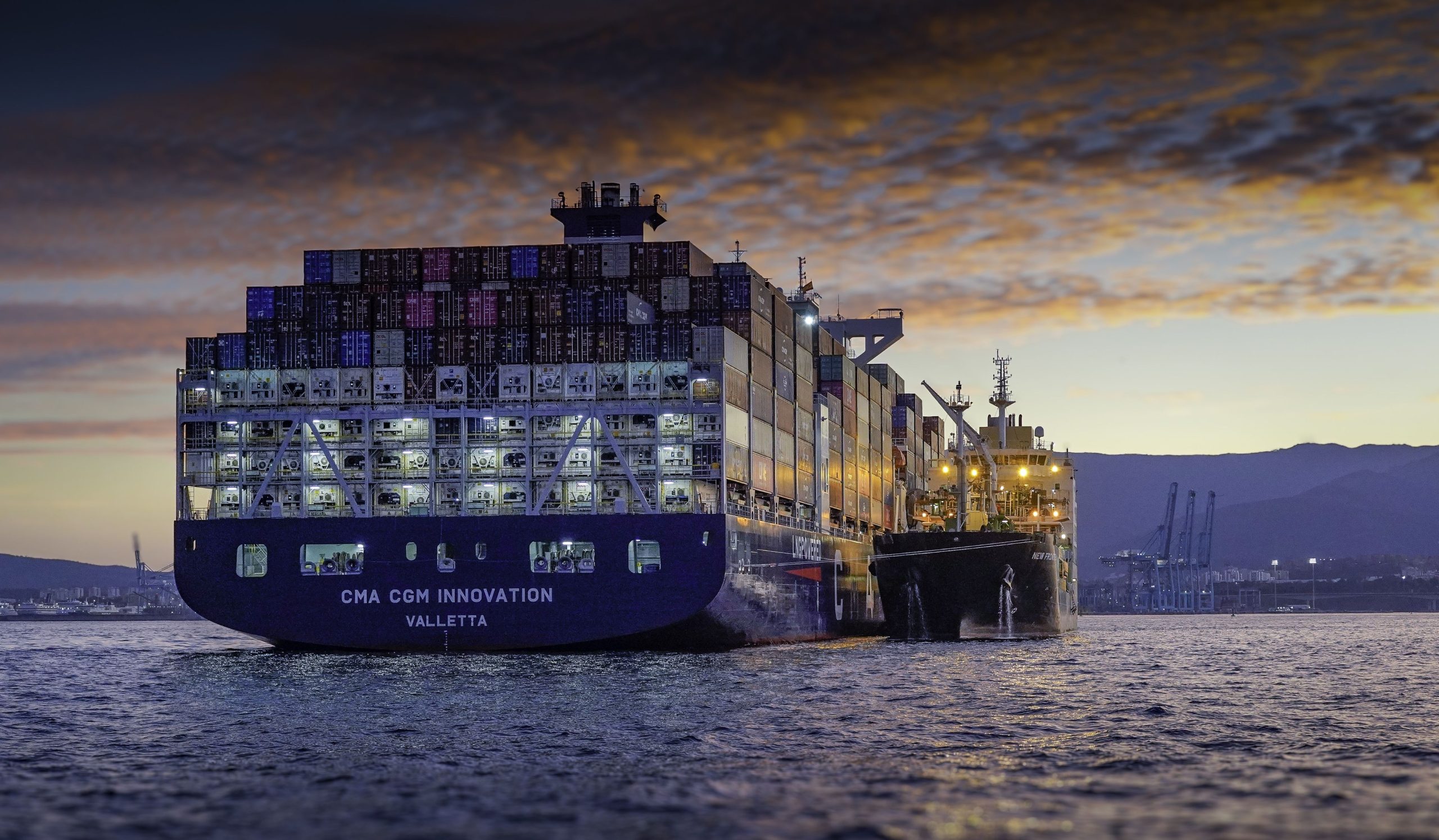
With 78 STS (ship-to-ship) LNG bunkering operations, the port of Algericas is now only behind Rotterdam and Marseille Fos, according to a statement by the port citing Gasnam data.
Of this volume, a total of 51,923 cbm, or approximately 16 percent of the total, was liquefied biomethane (bio-LNG), the statement said.
This figure positions the port of Algeciras as the largest international supply point for this type of sustainable fuel, the statement claims.
This has been made possible thanks to the commitment to bio-LNG by the three operators authorized by the port to carry out this type of operation.
These include Axpo, Shell, and Peninsula, as well as Enagas’ efforts through its subsidiary Scale Green Energy to develop the necessary infrastructure for the supply of LNG and bio-LNG.
In this way, the system is enabling an effective connection between biogas production on the mainland—reusing urban and agricultural waste—and the growing demand from the maritime sector driven by European regulations (ETS and FuelEU), the port said.
On the Iberian Peninsula, nine barges, plus another four under construction, can supply LNG, thereby ensuring the operational readiness of the global fleet of container ships, ferries, and car carriers, which have “drastically” increased their LNG consumption in Spanish ports.
Five of these vessels are stationed in the port of Algeciras.
According to Gasnam, 2025 has been a turning point not only for the port of Algeciras in particular, but for the Iberian Peninsula.
Thus, driven in part by Algeciras—which accounted for 37 percent of the volume supplied on the Peninsula—the trio of Shell, Peninsula, and Axpo led the largest increase in LNG supply to ships recorded in the European port system, doubling the figures from 2024, the statement said.