
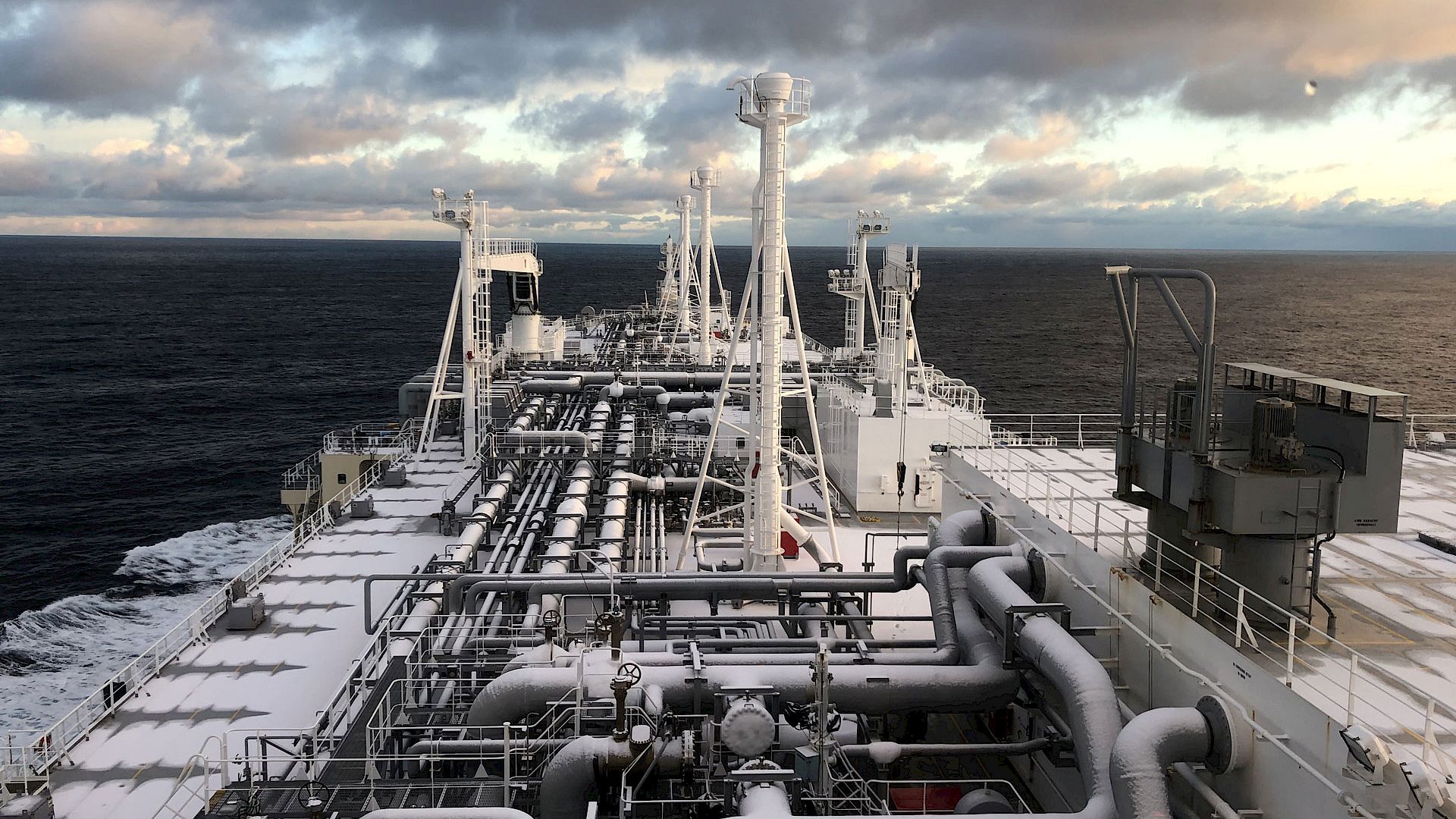
Spark30S (Atlantic) LNG freight rates have experienced the largest day-on-day change on record, increasing by $100,250 to $161,750 per day, Spark’s data lead, Qasim Afghan, told LNG Prime on Tuesday.
This marks the highest Atlantic freight rates since November 2023, and the highest rates on record for this time of year.
Spark25S (Pacific) rates also rose significantly, increasing $57,750 to $98,750 per day, he said.
Before the coordinated US and Israeli strikes on Iran during the weekend, Atlantic rates increased every week in February and reached $42,750 per day last week.
Despite oil markets being significantly affected due to the closure of the Strait of Hormuz, LNG markets have faced the most volatility during this week’s dramatic events, Afghan said.
The market’s inherent lack of structural flexibility has collided with the sudden shut-off of approximately 20 percent of global LNG supply, resulting in extreme volatility across global benchmarks, he said.
State-owned LNG giant QatarEnergy said on Monday that it has stopped production of LNG due to military attacks on its operating facilities in Ras Laffan and Mesaieed.
According to Vortexa, the last laden carrier to cross the Strait of Hormuz was the Endesa-controlled Gaslog Shanghai on February 28.
Qatar and the UAE have no alternative besides the Strait of Hormuz to export cargoes loaded at their facilities.
These shipments mostly head to Asia, but also to Europe.
Europe
European prices soared on Monday following the QatarEnergy announcement and continued to rise on Tuesday.
Europe’s benchmark gas contract, the Dutch TTF, climbed to more than 60 euros per megawatt hour (MWh) on Tuesday, almost double compared to last week.
According to Afghan, the SparkNWE DES LNG price, assessed as a basis to the TTF, is assessed at TTF-$0.230/MMBtu, marking a 75c day-on-day change.
“This is the largest day-on-day change since January 2023 and indicates significantly reduced demand for delivery slots into NWE, as the JKM-TTF spread continues to rally and global front-month arbs now strongly pointing to Asia,” he said.
Afghan said TTF prices for May 2026 “are up $9.139 (+84 percent) since Friday close, now priced at $20.020/MMBtu.”
“In that same period, the JKM-TTF regional price spread is up $5.10 to +$5.00/MMBtu in favour of Asia,” he said.
“As such, global front-month arbs have increased significantly and are now open to Asia across several major export locations,” Afghan said.
“The US front-month arb has increased $2.674 to +$2.317/MMBtu in favour of Asia delivery, the first time it’s opened since December and the strongest signal to Asia since December 2022. The Norwegian arb to Asia has also opened for the first time since 2023, currently priced at +$1.459/MMBtu,” Afghan said.