
LNG importer Eesti Gaas, a unit of Estonian investment firm Infortar, has started using underground gas storage facilities in Poland and Germany for the first time to prepare for the upcoming heating season.
These facilities are in addition to the underground gas storage facility in Latvia.
“Since spring, we have been stocking up on gas for the winter. As we now operate across the Arctic Circle to the German border, we utilize storage facilities in multiple countries,” Margus Kaasik, chairman of the board of Eesti Gaas, said in a statement.
He noted that currently, gas prices are lower than they were last winter.
“If no extraordinary events occur in the market, prices could continue to fall by spring. There is also reason for long-term optimism – several new LNG terminals and export projects are nearing completion, and the global gas market is shifting from a structural deficit to a surplus, which should lead to even lower prices,” Kaasik said.
According to Kaasik, during the heating season, renewable energy will continue to need support from gas, both now and in the future.
“On the coldest days, gas covers half of Estonia’s energy demand. If we had relied solely on electricity for heating last January, homes across Estonia and the wider region would have been cold and dark,” Kaasik said.
LNG supplies from US and Norway
During the last heating season, gas consumption in Estonia increased by nearly 40 percent compared to the previous period, and in Finland and the Baltic region by as much as 50 percent.
Eest Gaas said this increase was driven by a colder-than-average winter, a sharp decline in gas prices, and new supply routes from the West.
Gas consumption in Estonia from October to February last year reached 2.45 TWh, with the highest usage in January (0.73 TWh).
In Finland and the Baltic region, total gas consumption during the same period reached 26 TWh, peaking at 7.1 TWh in January.
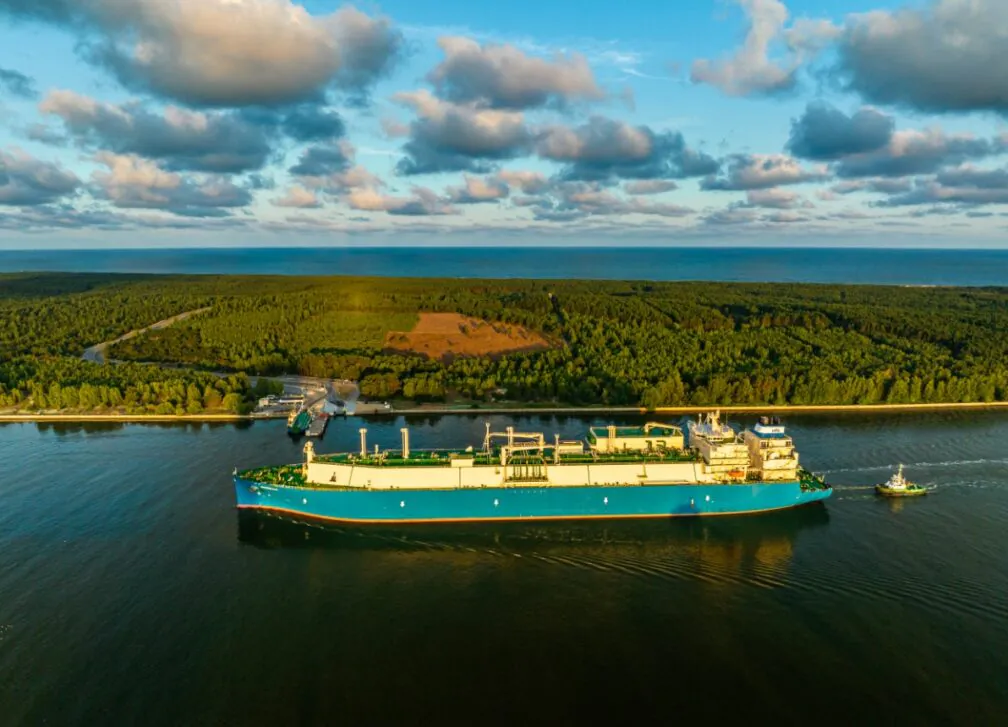
According to Eesti Gaas, the Baltic-Finnish region’s gas supply is primarily supported by the Klaipeda and Inkoo FSRU-based LNG import terminals.
LNG, mainly sourced from the US and Norway, arrives at these terminals, where it is regasified and delivered to customers through pipelines.
Eesti Gaas said it imports about one-third of the region’s gas supply and has secured 15 delivery slots at the Inkoo terminal and three at Klaipeda this year.
Beyond heating and electricity production, natural gas is also essential in industrial processes and as a raw material for the chemical industry, Eesti Gaas noted.