Fluxys did not include the number of ships received in its full-year financial report on Tuesday.
The company noted that since the outbreak of the war in Ukraine, pipeline gas flows that previously entered Europe from Russia in the east have fallen “dramatically”.
Replacement volumes for North-West Europe now come largely from the west, and the Fluxys Belgium network plays a “key role here,” it said.
Fluxys said that nearly 40 percent more natural gas flowed to Germany and the Netherlands via its infrastructure in the Zeebrugge area compared to 2024, accounting for a quarter of consumption in Germany.
The underground storage facility in Loenhout was also completely filled by early August, which was “crucial for entering the winter with fully stocked buffers.”
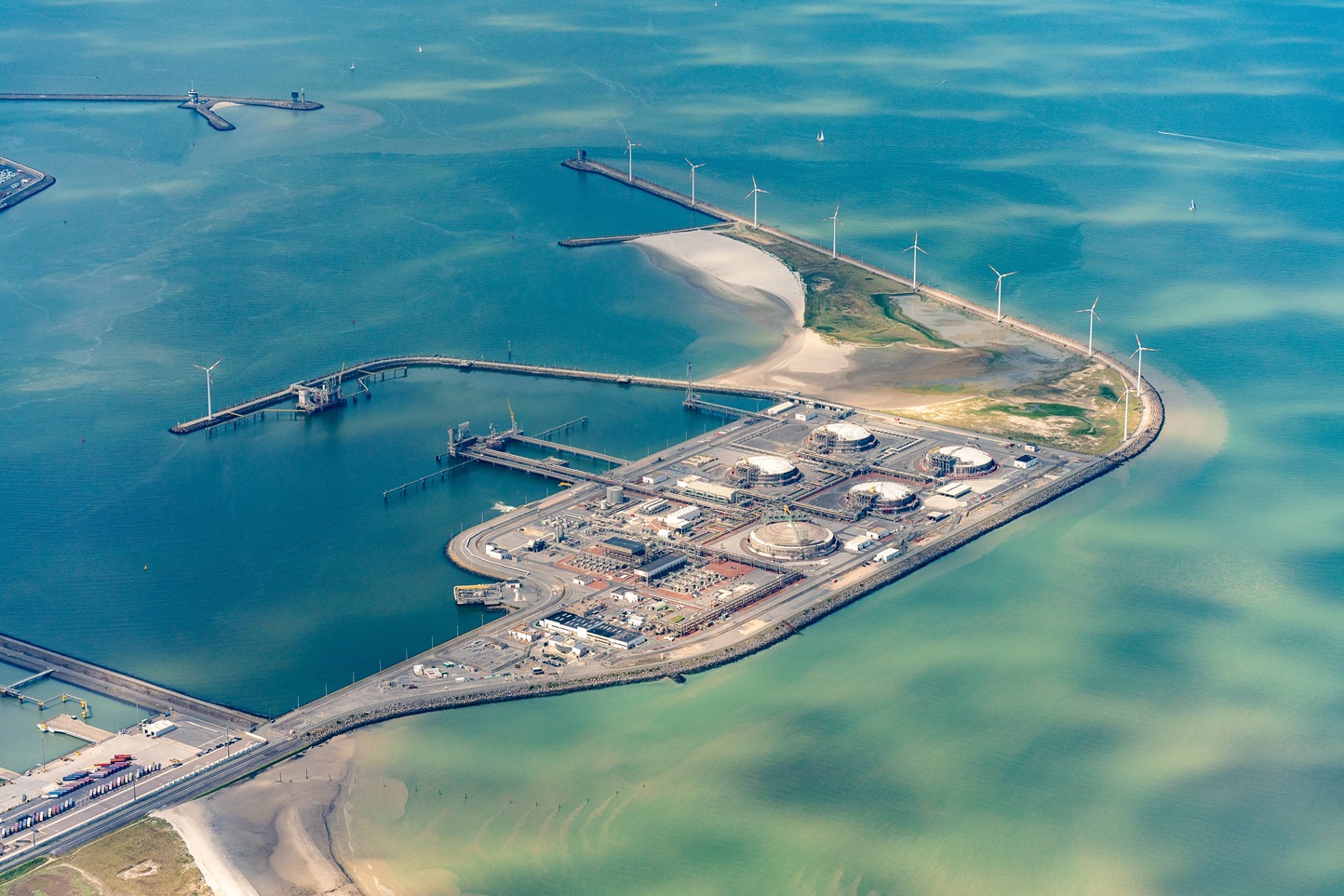
In operation since 1987, the Zeebrugge LNG terminal mostly receives shipments from Qatar, the US, and Russia.
Due to high demand for LNG, Fluxys is expanding the facility, and it has already increased the terminal’s capacity by adding three new open rack vaporizers.
The capacity has been increased since January 1, 2024, to 11.3 mtpa (15 bcma).
“The additional sendout capacity (1.3 mtpa / 2 bcma) is scheduled to be available on January 1, 2026,” Fluxys said previously.
Trucks, bio-LNG
Fluxys noted that the number of loaded LNG trucks in Zeebrugge is growing.
The terminal in Zeebrugge has been using four new loading bays to load LNG trucks since January 1, 2025.
According to Fluxs, the number of truck loading operations was up more than 10 percent to 8,440 last year.
In addition, demand for bio-LNG at the Zeebrugge terminal rose in 2025 by 73 percent to over 2.5 TWh.
Fluxys said the main customers are the heavy road and maritime transport sectors, which are “committed to greening.”
Bio-LNG accounted for almost 40 percent of small shiploads and almost 70 percent of loaded LNG trucks, which primarily supply LNG truck filling stations.
“Following the spectacular growth in 2024, when the volume of bio-LNG increased ninefold compared to 2023, the upward trend is clearly continuing,” the company said.
Sanctions, Middle East
Since the start of the war in Ukraine, the Council of the European Union has approved several sanctions packages against Russia, Fluxys noted.
Fluxys LNG, which, through long-term contracts, has the greatest exposure to counterparties under Russian control, applies these sanctions strictly, the company said.
Recently, Regulation (EU) 2026/261 on the gradual phase-out of imports of Russian natural gas was also adopted.
However, Fluxys LNG is not an importer, as the company neither supplies nor imports natural gas.
“Fluxys Belgium closely monitors developments regarding the sanctions and other measures intended to restrict European imports of Russian gas. The company follows on a daily basis the potential impact of geopolitical developments on its activities and ongoing contracts and acts fully in accordance with the applicable regulations,” it said.
In the context of the conflict in the Middle East, passage through the Strait of Hormuz is currently blocked for LNG vessels, and several LNG export facilities have been damaged, notably at QatarEnergy’s Ras Laffan terminal.
Fluxys said this could lead to a decrease in Qatari LNG exports to Europe due to the reduced availability of natural gas molecules.
“This may in particular have consequences for the LNG terminal in Zeebrugge, which has clients that import LNG from Qatar under long-term contracts of the type “ship or pay” for terminalling services,” Fluxys said.
“In the current state of affairs and subject to an analysis of each individual case that may arise, these contracts and the associated payment obligations remain fully in force and unchanged,” the company said.
The extent and duration of the consequences of this conflict are “currently difficult to assess,” the company added.
Nine slots
Fluxys LNG said in a separate statement last month that it is offering nine slots to unload, store, and regasify an LNG cargo in the Zeebrugge LNG terminal, for July to December 2026.
Auctions will be organized for new additional slots in July, August, September, November, and December.
For these slots, Fluxys LNG commercializes the firm rights to unload, store, and regasify up to 140,000 cbm LNG over 10 days, it said.