
Gasunie subsidiary GTS just published a resilience analysis that assesses the robustness of the European and Dutch gas systems in the face of prolonged gas supply disruptions
From its independent advisory role to the Dutch Minister for Climate and Green Growth on gas supply security, GTS believes that the Netherlands is “well prepared for common supply security situations, such as exceptionally cold winters and short-term infrastructure outages.”
“However, the Netherlands and Europe as a whole are insufficiently prepared for a prolonged and large-scale gas supply interruption,” it said.
Crucial measures required to get through prolonged interruptions are to keep existing gas storage facilities operational and build up strategic emergency gas reserves.
GTS recommends examining how much of the so-called ‘cushion gas’ can be used as part of the strategic emergency gas reserves, with the aim of having a strategic emergency reserve of sufficient size in place by the start of the 2026–2027 winter.
“Without these precautionary measures, the Netherlands will be insufficiently resilient against prolonged geopolitical disruptions, sabotage, and international supply issues,” it said.
European gas prices surged last week following US and Israeli attacks on Iran.
State-owned LNG giant QatarEnergy declared force majeure to its affected LNG buyers on March 4, two days after it stopped production of LNG due to military attacks on its operating facilities in Ras Laffan and Mesaieed.
This force majeure prompted several countries, mostly in Asia, to buy spot LNG cargoes at extremely high prices of up to $28.28 per mmBtu.
Changing geopolitical climate
Like in the rest of Europe, gas supply in the Netherlands has seen “drastic” changes over the past few years, GTS noted.
Where the Netherlands used to be a net exporter of gas, the country now depends on imports for roughly 67 percent of the gas it consumes.
The foreign gas comes partly from Norway and is increasingly imported in liquefied form from countries like the United States, GTS said.
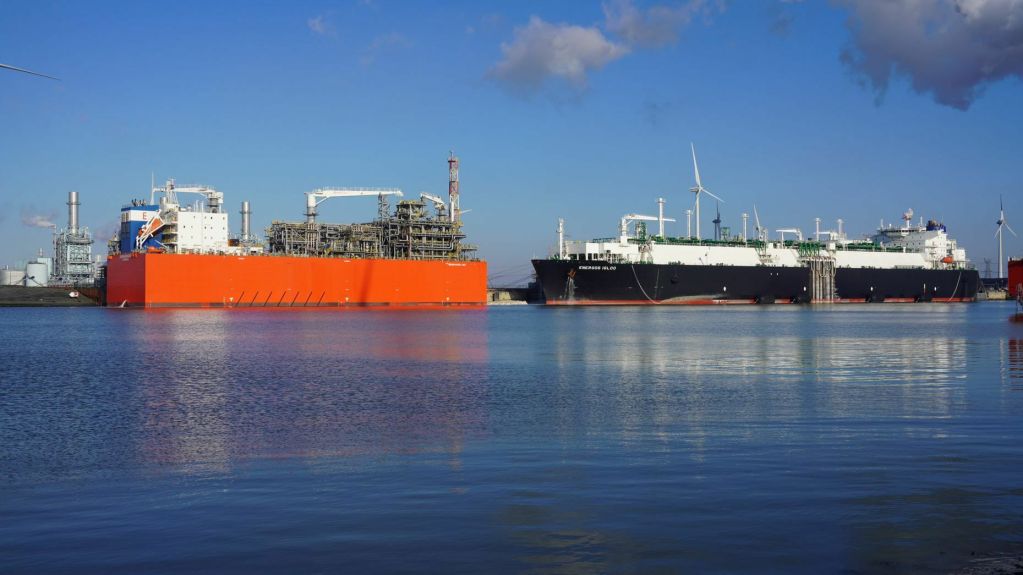
Gasunie and its Dutch partner Vopak operate the Gate LNG terminal in Rotterdam and the FSRU-based Emshaven facility.
The combination of high dependence on imports, geopolitical tensions and an energy system in transition adds to the vulnerability of the Netherlands.
According to GTS, a prolonged months-long disruption may lead to “extreme price rises, major economic impact and escalating energy poverty, comparable to the impact of the European gas crisis triggered by the Russian invasion of Ukraine.”
Strategic gas reserves
The Netherlands has four major gas storage facilities in former gas fields, which can be used to build up strategic gas reserves for emergency situations.
These gas storage facilities jointly hold 137 TWh of working gas and approximately 300 TWh of cushion gas.
Over the coming year, around 115 TWh of the working gas will be needed to cover common gas supply security situations.
According to GTS, the remaining gas, along with part of the cushion gas, can be used as strategic emergency reserves in order to bridge a prolonged gas supply interruption.
Cushion gas is a large amount of natural gas that is kept in a storage facility to maintain adequate pressure to be able to extract the working gas.
In exceptional emergency situations, some of this gas can be used to mitigate shortages.
GTS recommends further examining whether cushion gas could be used more widely.
The Netherlands has around 300 TWh in cushion gas, and there is at least 800 TWh of it across Europe.
Although technically feasible, GTS is not planning for a situation where the Groningen gas field is kept open as a strategic gas reserve, given the current political reality and the fact that existing legislation would not allow it.
European approach
A prolonged gas supply disruption is a Europe-wide risk rather than just a domestic Dutch problem.
GTS stresses that EU member states must assess the risks together and jointly decide whether and how to organise emergency gas reserves.
According to GTS, the revision of EU rules on gas supply security offers an “ideal opportunity to make clear agreements on this.”
“They will have to specifically allow for strategic emergency gas reserves to be used in the event of an imminent or actual prolonged gas supply disruption, both to protect households and to keep industry running,” GTS said.