
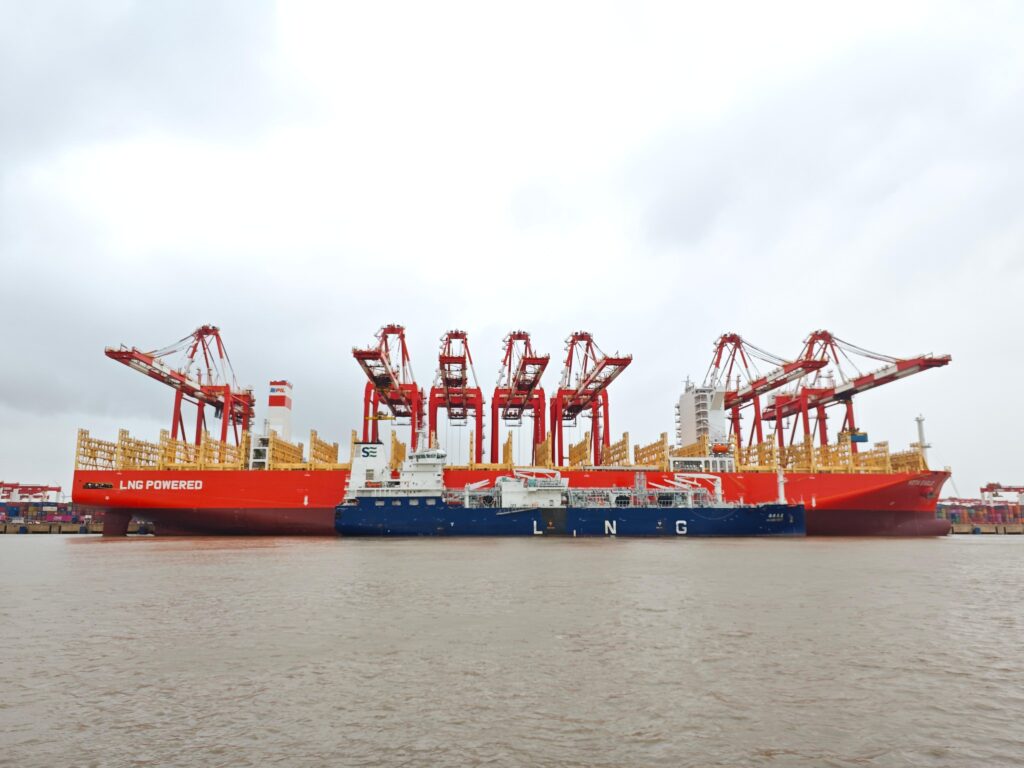
The latest data from DNV’s Alternative Fuels Insights (AFI) platform shows that a total of 515 alternative-fueled vessels were ordered in 2024, representing a 38 percent year-on-year increase compared to 2023, underscoring the industry’s growing commitment to decarbonization.
The orders for 264 LNG-powered ships compare to 130 LNG-powered vessels in 2023 and 222 LNG-powered vessels in 2022.
These statistics do not include dual-fuel LNG carriers or smaller inland vessels.
Besides LNG-powered vessels, there were orders for 166 methanol-fueled vessels (up 4 percent), 51 LPG-powered vessels (down 22 percent), 27 ammonia-fueled vessels (up 238 percent), and 7 hydrogen-powered vessels (down 30 percent).
DNV said the growth in alternative-fueled vessel orders has been heavily driven by the container and car carrier newbuild boom over the last three years.
In 2024, 69 percent of all container ship orders were for ships capable of being powered by alternative fuels, driven by cargo owners responding to consumer demands for more sustainable practices and liner companies preparing to replace older tonnage.
The preferred fuel choice for this segment was LNG (67 percent).
In total, the container and car carrier segments made up 62 percent of all alternative fuel orders in 2024, according to DNV.
From methanol to LNG
While methanol drove newbuilding orders for alternative-fuelled vessels at the beginning of the year, LNG was the industry’s alternative fuel of choice by year-end.
Jason Stefanatos, global decarbonization director at DNV said market conditions, infrastructure development, fuel production updates, and cargo owners’ needs are all shaping the demand for different fuels, both in the short and long term.
“The shifting trends in LNG and methanol orders this year might be due to the slow development of green methanol production. In the long run, green methanol has potential to be part of the energy mix along with ammonia,” he said.
“In parallel, LNG offers a vital bridging fuel option benefiting from existing infrastructure and short-term emissions reductions while being capable of acting as a long-term solution as well, assuming RNG (renewable natural gas) will be available and provided at a competitive price,” Stefanatos said.
Number of LNG-fueled ships in operation doubled
DNV said that the number of LNG-fueled ships in operation doubled between 2021 and 2024, with a record number of deliveries (169) in 2024.
By the end of 2024, 641 LNG-powered ships were in operation.
According to the AFI orderbook, this number is expected to double by the end of the decade.
While the bunkering infrastructure for some alternative fuels remains underdeveloped, LNG bunkering is maturing, DNV noted.
The number of LNG bunker vessels in operation grew from 52 to 64 over the last year, with continued growth expected in 2025.
The significant gap between LNG bunkering supply and demand is expected to widen over the next five years based on the AFI orderbook.
DNV said addressing this challenge by developing the appropriate infrastructure for alternative fuels – both for vessels and bunkering – can create demand signals to stimulate long-term fuel production.
With the EU regulatory package, Fit for 55, setting requirements on a large network of ports to have LNG bunkering infrastructure, it is expected that the availability of LNG in ports will increase, DNV added.