
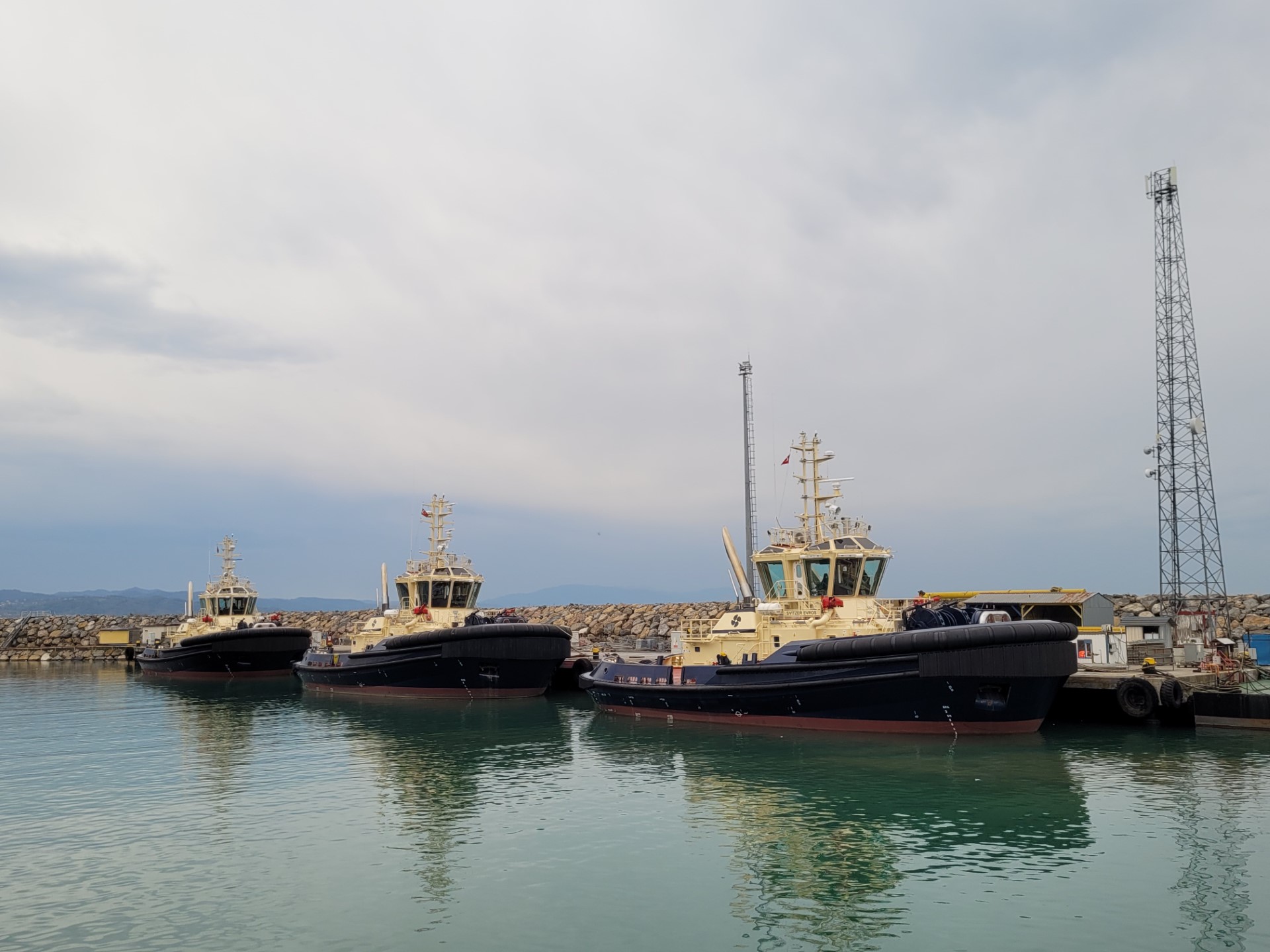
Three new tugs, owned by Denmark’s Svitzer, are ready to start serving Gastrade’s FSRU-based LNG import terminal in Alexandroupolis, Greece.
Last month, Turkey’s Med Marine delivered three RAstar 2800 tugboats, all designed by Canada’s Robert Allan, to Maersk’s Svitzer.
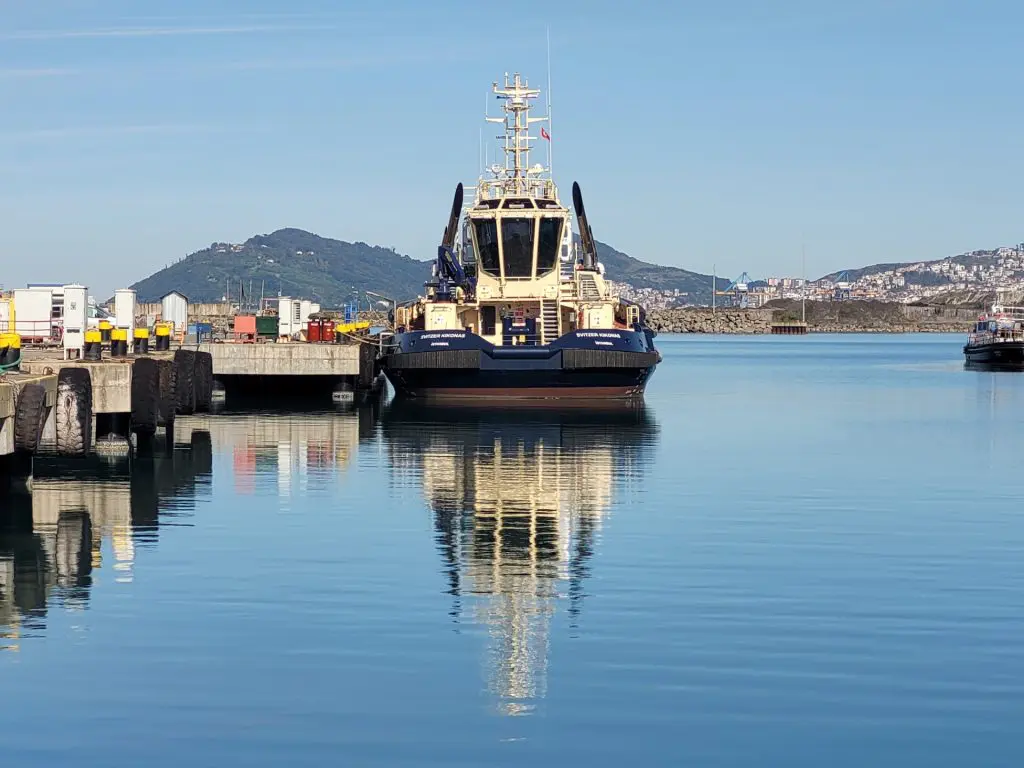
The names of the tugs are Svitzer Elmina, Svitzer Evros, and Svitzer Kikonas.
All three tugs will be deployed in Greece to serve Gastrade’s Alexandroupolis FSRU-based LNG terminal.
“We expect the three tugs to be in place in Alexandroupolis sometime next week,” a spokesperson for Svitzer told LNG Prime on Tuesday.
Earlier this year, Svitzer secured a contract from Gastrade to provide towage services for the LNG import project in Alexandroupolis.
Under the 15-year service deal, Svitzer will set up towage services and support for advanced LNG operations at the new import terminal.
The tugboats, fully manned by Greek crew, will assist the FSRU and the carriers delivering LNG.
FSRU on its way to Greece
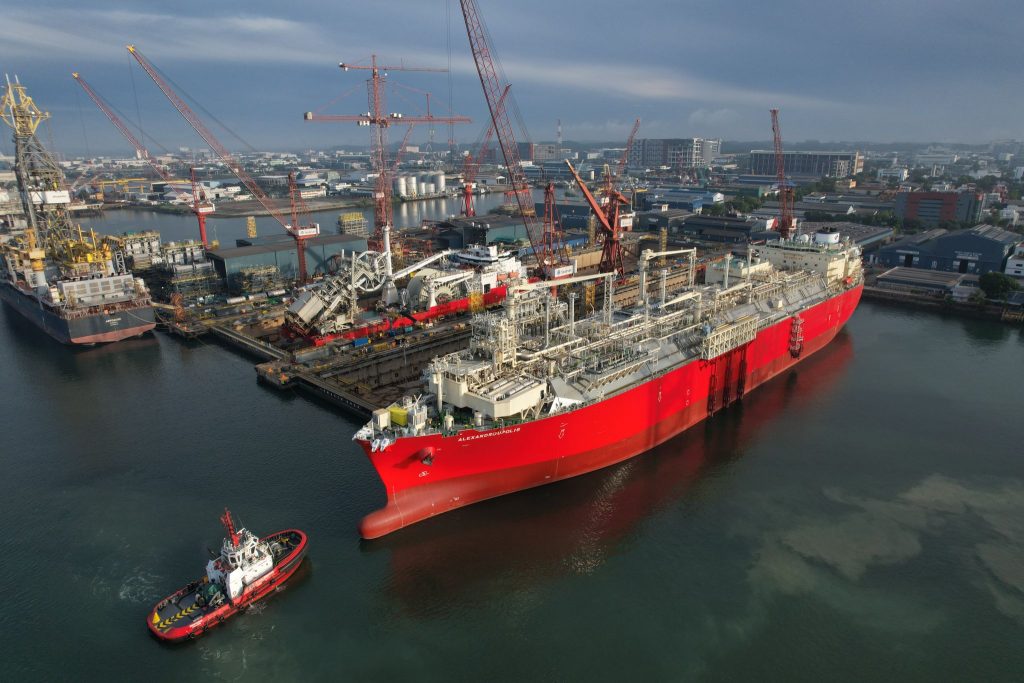
The 153,600-cbm, Alexandroupolis, which will serve Gastrade’s LNG import terminal, recently left Singapore and is on its way to Greece.
Gastrade expects the converted FSRU to arrive on December 17.
The firm also launched a tender on October 31 for the supply of the commissioning cargo and relevant services and the tender closed on December 5.
“Within December 2023, Gastrade will communicate to the successful tenderer a precise date for the unloading of the commissioning cargo which is likely going to be within the first half of January 2024,” the company said.
Gastrade said that the commercial operation date for the project “remains as planned for the first quarter of 2024.”
The Greek company took the final investment decision on the project worth about 363.7 million euros ($394 million) in January last year and officially started construction in May the same year.
Gastrade’s shareholders include founder Copelouzou, DESFA, DEPA, GasLog, and Bulgartransgaz.
Shareholder and Greek LNG shipping firm GasLog told Keppel Offshore & Marine, now Seatrium, in February last year to proceed with the conversion of the 2010-built, GasLog Chelsea, to an FSRU.
The vessel entered the yard in February this year and the partners renamed it to Alexandroupolis.
GasLog will sell this unit to Gastrade for about $265 million.
The Alexandroupolis LNG terminal will have a capacity of 5.5 Bcm.
With this project, Greece will get its first FSRU and also the second LNG import facility, adding to DESFA’s import terminal located on the island of Revithoussa.
In addition to this unit, Gastrade is also planning to install a second FSRU offshore Alexandroupolis.