
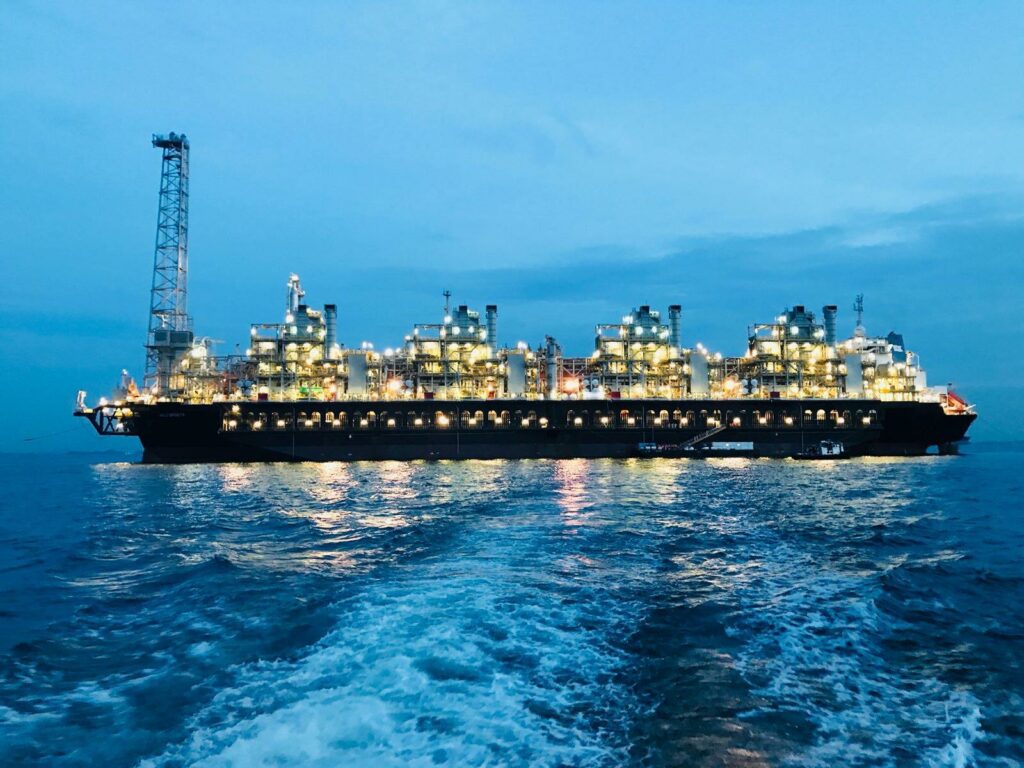
Singapore’s Keppel Offshore & Marine claims that converting an old carrier into a floating LNG producer saves about 33% of greenhouse gas emissions compared to building a new unit.
The findings are part of a Keppel-commissioned study conducted by consultants Environmental Resources Management (ERM).
The study assessed the converted Golar FLNG Hilli Episeyo and a newbuild unit of a comparable design and specification.
It included the entire project life cycle, from the end of life of the LNG tanker, repurposing or shipbuilding of the FLNG, and maintenance of the unit.
According to the paper, converted FLNG saves a total of 63,343 tons of GHG emissions – equivalent to taking around 13,500 cars off the road for a year.
The savings almost completely occur during the conversion stage, it said.
New life for old LNG carriers and cost savings
The conversion of old carriers into FLNGs contributes to the circular economy, adding decades to the life of the vessel, Keppel says.
This also means recapturing value that would have been lost through disposal. It also leads to reducing the consumption of materials that would have been needed for a new unit.
For example, conversion of FLNG Hilli Episyeo led to a 39% reduction in virgin steel usage, the firm says.
Golar’s Hilli Episeyo is the world’s first converted FLNG vessel having a capacity of 2.4 mtpa from two trains.
The vessel works offshore Cameroon’s Kribi and has maintained 100% commercial uptime since May 2018 dispatching 42 cargoes.
Besides this FLNG, Keppel is currently also undertaking its second conversion for Golar.
The Gimi FLNG will serve a 20-year charter for BP’s Greater Tortue Ahmeyim project offshore West Africa.
In addition, Keppel has previously converted several vessels into floating storage and regasification units or FSRUs for Golar.
“Golar has long understood the merits of repurposing its fleet of high quality assets,” Iain Ross, CEO of Golar LNG said.
The LNG player has never scrapped an asset having repurposed five vessels over the last 13 years with a further two currently in the process.
“Golar has consistently believed in the sustainability of this approach too and Keppel’s study now quantifies the environmental advantages of this part of our FLNG business model,” Ross said.
FLNG conversion solution helps minimise Golar’s carbon and environmental footprint but also allows the firm’s customers to minimise theirs, he added.