
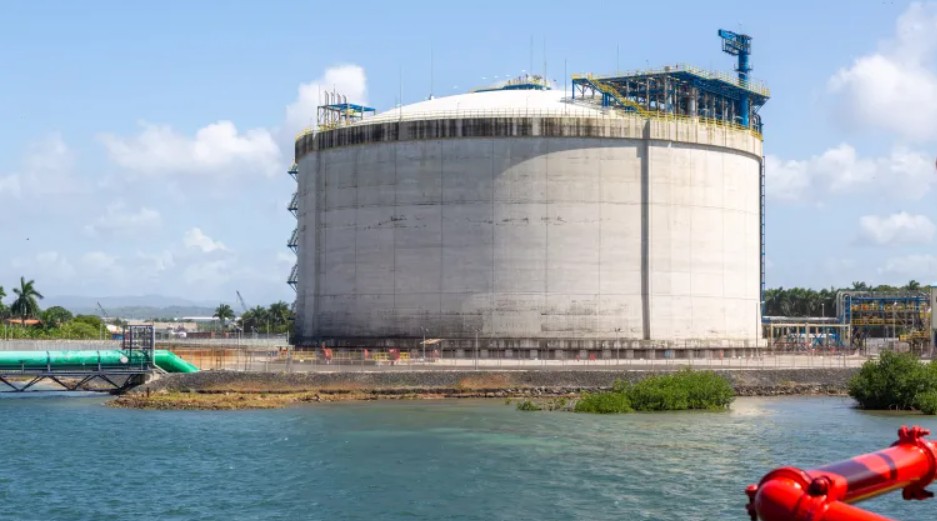
Sinolam said in a statement on Wednesday that “AES and its partners conspired to dismantle Sinolam’s LNG power generation and terminal projects in Panama.”
“The lawsuit alleges the defendants used coercive tactics, misuse of confidential information, and improper influence over government regulators to eliminate competition and secure monopoly control over LNG importation, storage, regasification, and LNG-fueled power generation in Panama,” Sinolam said.
Sinolam alleges it lawfully secured regulatory approvals, power purchase agreements, and long-term customer commitments to develop a major LNG-fired power plant and a corresponding LNG terminal in Colón, Panama.
These projects were designed to capitalize on Panama’s emergence as the LNG hub for Central America following the expansion of the Panama Canal, the company said.
Lawsuit details
“The complaint asserts AES, headquartered in Arlington, Virginia, viewed Sinolam as a threat to be eliminated from the Panamanian market,” Sinolam said.
Sinolam further alleges that, after Sinolam “declined pressure to abandon its terminal project or submit to commercially unreasonable terms that would have made it dependent on AES’s LNG infrastructure, AES shifted from negotiation to exclusion.”
“According to the complaint, senior AES executives directed critical strategy from its global corporate headquarters in Virginia, including efforts to delay Sinolam’s permits, undermine its government approvals, and ultimately block the projects,” Sinolam said.
The lawsuit further alleges that InterEnergy entered the scheme after obtaining Sinolam’s confidential business information under a non-disclosure agreement.
“Rather than investing in Sinolam’s project, the complaint alleges InterEnergy used the confidential information to partner with AES in forming a new joint venture that displaced Sinolam and its customers from the market,” Sinolam said.
“Through this partnership, AES and InterEnergy allegedly removed one of Sinolam’s key customers from the market. The complaint claims this conduct rendered Sinolam’s long-term contracts worthless and destroyed billions of dollars in expected economic value,” the company said.
More than $4 billion
Sinolam alleges that “defendants leveraged political influence to obtain regulatory advantages such as expedited approvals for AES-aligned projects and the revocation of Sinolam’s licenses.”
According to the complaint, these actions ultimately led to the permanent cancellation of Sinolam’s power generation license by Panamanian regulators.
Sinolam further alleges the Panamanian government is a significant shareholder in AES’s Panama-based subsidiary, AES Panama, and that AES “used its connections at the highest levels of the Panamanian government to pressure Sinolam over a period of many years and across successive administrations.”
“As a result, according to the lawsuit, AES now controls both major LNG-fueled power plants in Panama (one in partnership with InterEnergy) and the only operational LNG terminal in the country—effectively eliminating competition in Panama and exerting significant control over energy supply in Central America and the Caribbean, markets worth billions of dollars,” the company said.
The lawsuit asserts ten claims, including tortious interference with contract and business expectancy, Virginia statutory civil conspiracy, and Virginia common-law conspiracy.
Sinolam seeks compensatory damages in excess of $4 billion, along with other relief permitted by law.
LNG Prime invited AES to comment on the lawsuit.
“The company believes the claim lacks merit and intends to defend itself vigorously,” AES said.
GasLog FSU
In 2019, Greece’s GasLog signed a 10-year time charter with Sinolam LNG Terminal to provide a floating storage unit (FSU) to the latter’s gas-fired power project in Panama.
GasLog said at the time that the FSU would receive, store, and send out LNG to a gas-fired power plant being developed near Colón, Panama, by Sinolam Smarter Energy LNG Power, a subsidiary of private Chinese investment group Shanghai Gorgeous Investment Development Company.
The shipping firm also stated that the power project had entered into long-term power purchase agreements with leading Panamanian utility companies, as well as a 15-year LNG sale and purchase agreement with Shell.
Singapore’s Sembcorp completed the conversion of GasLog’s 155,000-cbm carrier GasLog Singapore in 2021.