
Pembina said on Wednesday that the agreement is a synthetic liquefaction service structure for 1 mtpa of capacity, under which Pembina will provide transportation and liquefaction capacity to Petronas LNG over a 20-year term.
It enables Petronas to access an additional natural gas export outlet for its sizeable Canadian upstream investment, which includes a stake in LNG Canada, while providing Pembina with a stable long-term, take-or-pay revenue stream and the potential for value enhancement, Pembina noted.
Pembina said that the deal also demonstrates the shared commitment of both firms to realize the long-term potential of Canadian LNG.
The Canadian company previously signed a 20-year take-or-pay liquefaction tolling service agreement for 1.5 mtpa of LNG to support the final investment decision on Cedar LNG in June 2024 and ultimately maintain key project timing and economic parameters, with the expectation of remarketing the capacity at a later stage.
The agreement with Petronas marks a “significant” first step in Pembina’s remarketing efforts, it said.
Moreover, Pembina expects to reach definitive agreements for the remaining 0.5 mtpa of capacity by the end of 2025.
The $4 billion Cedar LNG project remains on time and on budget, with an expected in-service date in late 2028, Pembina added.
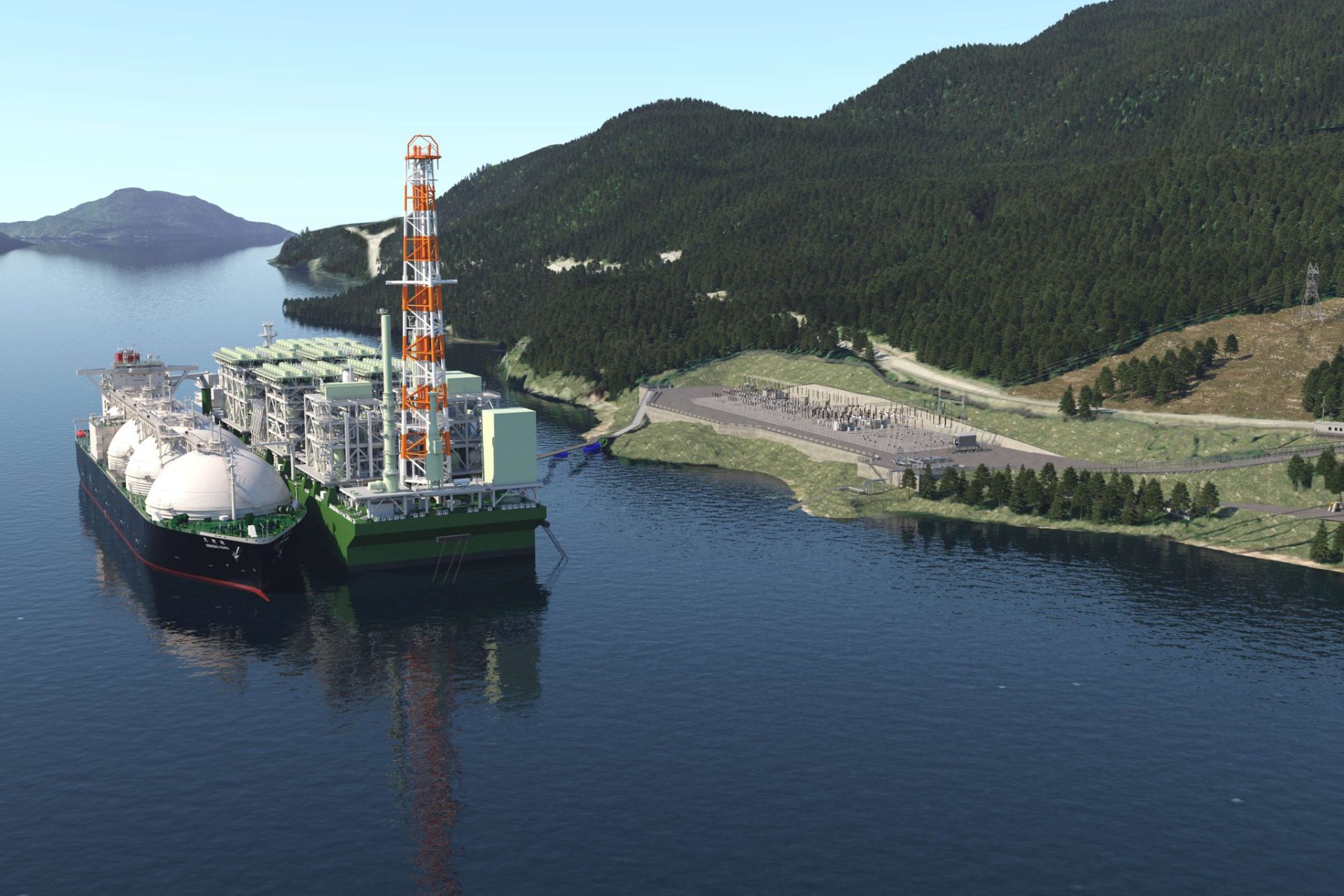
The Haisla Nation has a 50.1 percent stake and Pembina owns 49.9 percent in the project which includes the construction of a floating LNG facility with a nameplate capacity of 3.3 mtpa, located in the traditional territory of the Haisla Nation.
In June, South Korea’s Samsung Heavy Industries officially started building Cedar’s FLNG, which will be installed in Kitimat.
Cedar LNG said that the Haisla Nation has chosen “megúgu” as the name for the floating LNG facility.
Once complete, the vessel will be transported from South Korea to the Cedar LNG site in Haisla traditional territory.