
The two firms said in a joint statement that the combined entity, operating under United Energy LNG (UE LNG), immediately oversees a portfolio of three LNG production sites in advanced stages of development.
Moreover, UE LNG announced the launch of front-end loading phase 1 (FEL-1) at its first project site in Houston, Texas, with a second confidential site underway.
According to the partners, a third site in Independence, Kansas is scheduled to begin FEL-1 later this month.
With geographic diversity and early-stage capacity, UE LNG aims to expand LNG access for high-demand domestic users, the two firms said.
“While the majors are focused on megaprojects, we’re deploying modular, nimble solutions that get LNG to the people and industries who need it now,” said Brian Guinn, CEO of United Energy LNG.
Up to $270 million
The merger combines United Energy’s upstream operating experience and public market presence with Power LNG’s permitting progress, engineering capabilities, and pipeline of modular projects.
According to the duo, the targeted liquefaction capacity is up to 540,000 mtpa at full deployment.
The estimated capital investment is between $240 million and $270 million across the three facilities.
United Energy LNG plans to reach financial close on its first three facilities by the first quarter of 2026, with commissioning expected by the first quarter of 2027.
The company is “actively engaging” with feedgas suppliers, utilities, and logistics providers to build out a nationwide virtual LNG delivery network.
“The company estimates that its addressable domestic market exceeds 2 billion cubic feet equivalent annually, representing a $3+ billion opportunity in underserved power, transport, and industrial sectors,” the duo said.
Earlier this year, Power LNG said it expects to complete front-end engineering and design (FEED) for its proposed Newport Galveston LNG facility in 2025.
In April 2023, Power LNG secured authorization from DOE to export LNG from its proposed facility to be located on Galveston Island, Texas, to free trade agreement nations.
Power LNG requested long-term, multi-contract authorization to export domestically produced LNG in a volume equivalent to 7.0445 billion cubic feet per year (Bcf/yr) of natural gas for a term ending on December 31, 2050.
According to Power LNG, the facility is anticipated to “include a natural gas liquefaction plant with a production capacity of up to approximately 7.0445 bcf of LNG per annum at 100 percent capacity, a truck loading facility, a storage area, and dock access.”
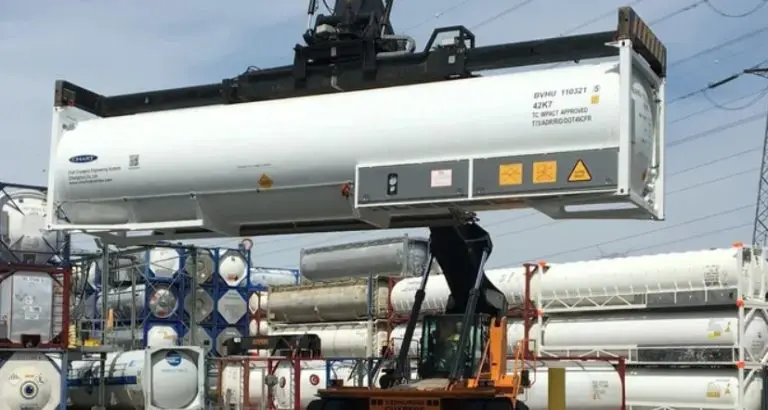
Power aims to load the LNG supplies into ISO containers at the facility, then transport the containers by truck to a nearby loading dock within the facility, where it will be loaded onto ocean-going container vessels.