
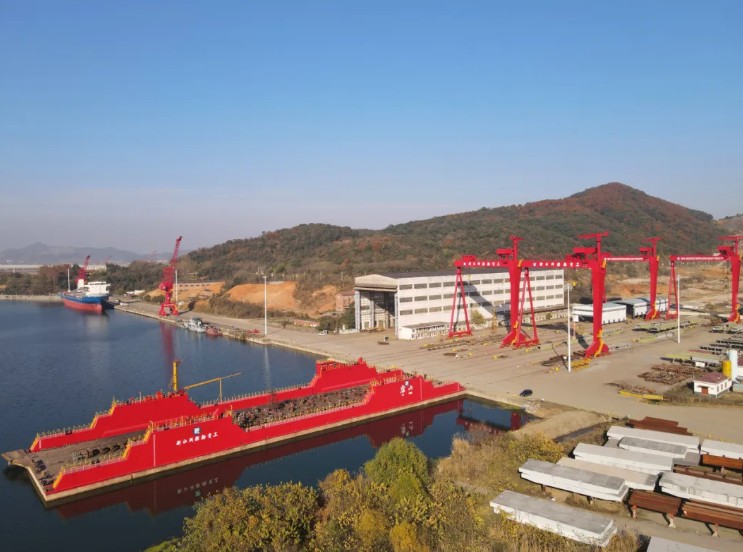
According to a statement by the Chinese shipbuilder, the contract, which was signed on March 5, includes the construction of two 20,000-dwt LNG-powered bulk carriers for Changjiang Freight (Zhoushan), a unit of China Merchants’ China Yangtze Shipping Group.
The contracted bulk carriers are designed for river-sea navigation in the Class A navigation zone of the Yangtze river.
Equipped with two 2,000kW main engines, its LNG propulsion reduces carbon dioxide emissions by over 20 percent, contributing to the green development of Yangtze river shipping, the shipbuilder claims.
No further details have been revealed.
LNG fuel continues to dominate in new orders for alternative-fueled vessels.
According to DNV’s data, 30 LNG dual-fuel vessels have been ordered in the first two months of the year, compared to 54 in the first two months of 2025.
A further two orders were also placed for LNG bunkering vessels in February, continuing the steady expansion of the LNG bunkering orderbook, in line with the growing LNG-fueled fleet.
DNV’s Alternative Fuels Insight (AFI) platform shows that there are now 873 LNG-powered ships in operation and 653 LNG-fueled vessels on order.
As per vessels on order, LNG-powered containerships account for a big part of the orders with 410 units. Shipping firms also ordered 91 car carriers, 43 crude oil tankers, and 39 oil and chemical tankers.
These statistics do not include smaller inland vessels or dual-fuel LNG carriers.