
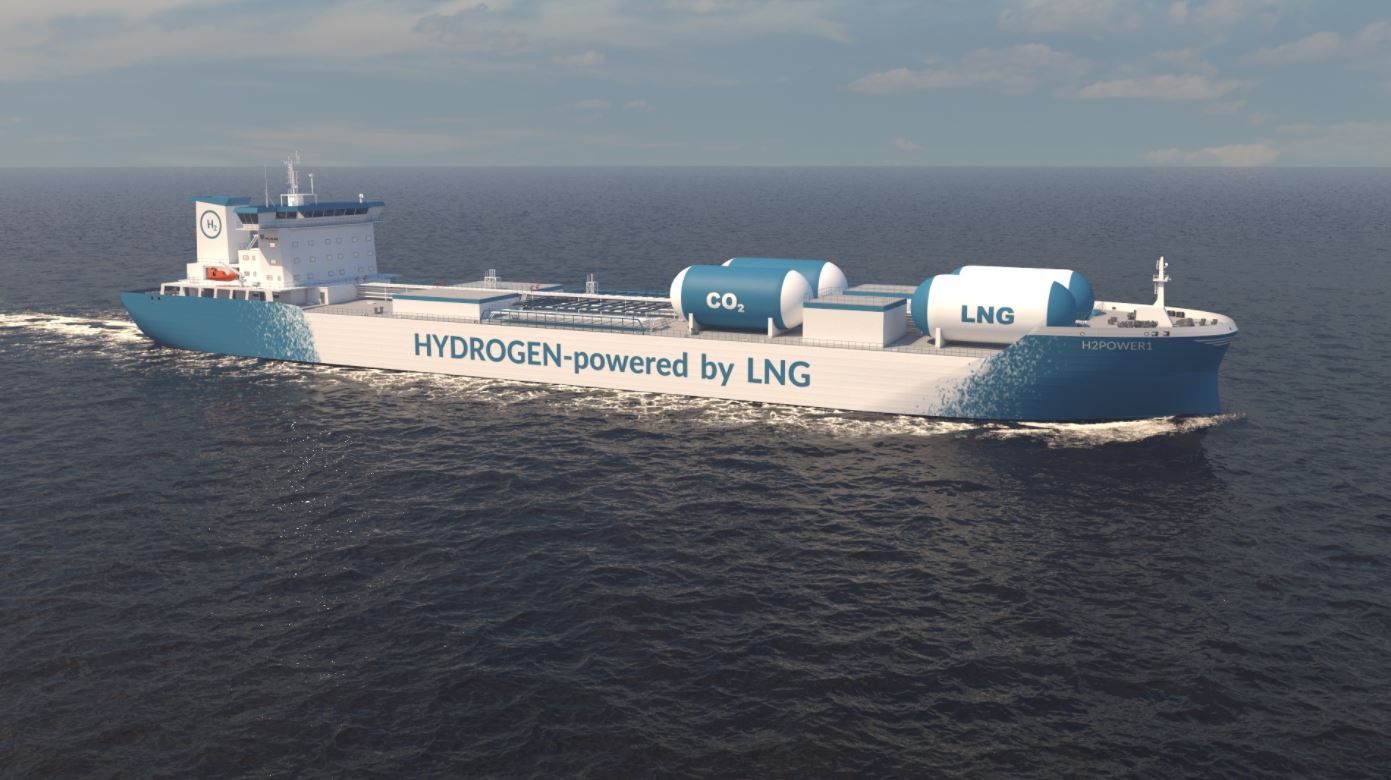
Sweden’s FKAB Marine has received basic design approval from Italian classification society RINA for a new type of LNG-powered MR tanker that would combine LNG with steam to produce hydrogen and CO2 on board.
According to a joint statement by FKAB and RINA on Thursday, the LNG and hydrogen-fueled vessel is the result of a joint project with ABB and Metacon’s unit, Helbio.
Conceived by the Italian classification society and designed by FKAB, the propulsion combines the ship’s fuel (LNG) with steam to produce hydrogen and CO2, the statement said.
Also, RINA said this marks the first approval in principle of such MR tanker design using currently viable technology and fuels that achieves IMO 2050 targets.
“The new design enables the use of hydrogen as a fuel today without the need for bunkering and storage onboard and exceeds IMO 2050 targets for 70 percent reduction of carbon intensity,” said Antonios Trakakis, Greece marine technical director at RINA.
The MR tanker design combines LNG with steam in a Helbio gas reformer to split LNG molecules into hydrogen and CO2.
Hydrogen then directly goes to fuel the internal combustion engines and fuel cells in ABB’s hybrid marine power system.
The system captures the CO2 by splitting the LNG molecules, rather than from exhaust gas, the statement said.
Meeting decarbonization targets
According to the joint statement, any solution that aims to reduce a ships’ CO2 emissions today should ensure a competitive carbon intensity index (CII) rating, which has increasingly stringent rating thresholds towards 2030, throughout the whole service life of the vessel, not only when getting closer to 2050.
The partners said this may prove to be a “substantial limitation for conventional ships built with the intention of being retrofitted after 10-15 years from delivery.”
Using the new design, hydrogen usage could be “progressively” increased to maintain a top CII rating throughout the life of the ship, reducing CO2 emissions in a parallel slope with the applicable regulations, the statement said.
According to FKAB and RINA, the ship can meet full decarbonization targets by either running the engine on 100 percent hydrogen or by producing all the power needed by fuel cells.
This would allow the owner to decide the rate of CO2 reduction.
The partners said that carbon disposal would be a vital technology for the future to meet global decarbonization goals across all sectors.
Also, the new concept would not require onshore carbon disposal technology to be available before 2032.
No portside hydrogen infrastructure
Andreas Hagberg, head of sales and marketing department at FKAB, said the concept is “revolutionary” as it does not require any portside hydrogen infrastructure.
This means that shipowners can convert existing vessels as the partners can install all of the hydrogen-producing technology on deck.
Also, the LNG cryogenic steam liquefies the CO2 for onward usage as the inert gas for the tanker.
The hydrogen can power the main engine, or fuel cells, or a hybrid of the two. The approval in principle covers the hybrid option.
Besides the MR tanker, a wide range of vessel types and sizes could use this technology as well, the statement said.
Worth mentioning here, RINA joined forces with Finland’s Wartsila and four other companies to work on a new bunkering solution last year.
This concept combines LNG with steam to produce hydrogen and CO2 on board a ship as well.