
The regulator issued the order on remand on August 29, stating it affirms its earlier determinations that the Rio Grande LNG terminal “is not inconsistent with the public interest”, and the Rio Bravo pipeline project “is required by the public convenience and necessity.”
FERC said all directives in the Commission’s prior orders remain in effect.
The regulator recently released a final supplemental environmental impact statement for NextDecade’s Rio Grande LNG facility and the accompanying pipeline in Texas.
FERC prepared the final supplemental environmental impact statement to address the August 6, 2024 opinion issued by the U.S. Court of Appeals for the District of Columbia Circuit regarding the Commission’s environmental review of the Rio Grande LNG terminal and Rio Bravo pipeline project.
In August 2024, the court issued an order vacating FERC’s remand authorization of NextDecade’s Rio Grande LNG facility and the pipeline, saying that FERC should have issued a supplemental EIS during its remand process.
In March, the court revised its August 2024 judgment against the Commission’s order for the first five liquefaction trains at the Rio Grande LNG facility.
Rio Grande LNG
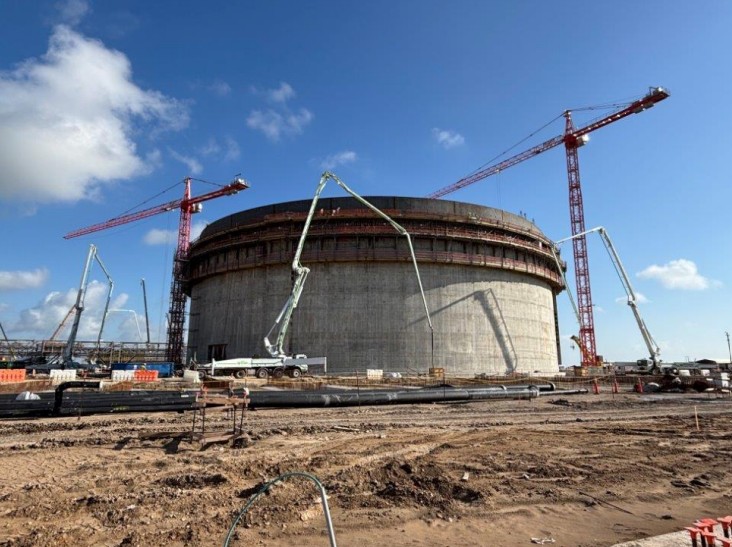
NextDecade is currently building three trains at the site located on the north shore of the Brownsville Ship Channel in south Texas.
In July 2023, NextDecade took the final investment decision on the first three Rio Grande LNG trains and completed a $18.4 billion project financing.
Phase 1, with a nameplate liquefaction capacity of 17.6 mtpa, has 16.2 mtpa of long-term binding LNG sale and purchase agreements.
Additionally, the firm closed a joint venture agreement for the first phase, which included approximately $5.9 billion in financial commitments from Global Infrastructure Partners (GIP), GIC, Mubadala, and TotalEnergies.
The deal also included options for the fourth and fifth trains.
In June, NextDecade and compatriot Bechtel recently finalized EPC contracts worth $9.09 billion for the construction of the fourth and fifth trains and related infrastructure at the Rio Grande LNG facility.
NextDecade also secured $1.8 billion in equity commitments from TotalEnergies and Global Infrastructure Partners to finance the construction of the fourth train at its Rio Grande LNG facility.
In addition to these five trains, NextDecade announced plans in March to build up to five more trains at the Rio Grande LNG facility.
NextDecade said it is developing and beginning the permitting process for Trains 6 through 8.
The LNG terminal operator expects these trains to increase its total liquefaction capacity by approximately 18 mtpa once constructed and placed into operation.