
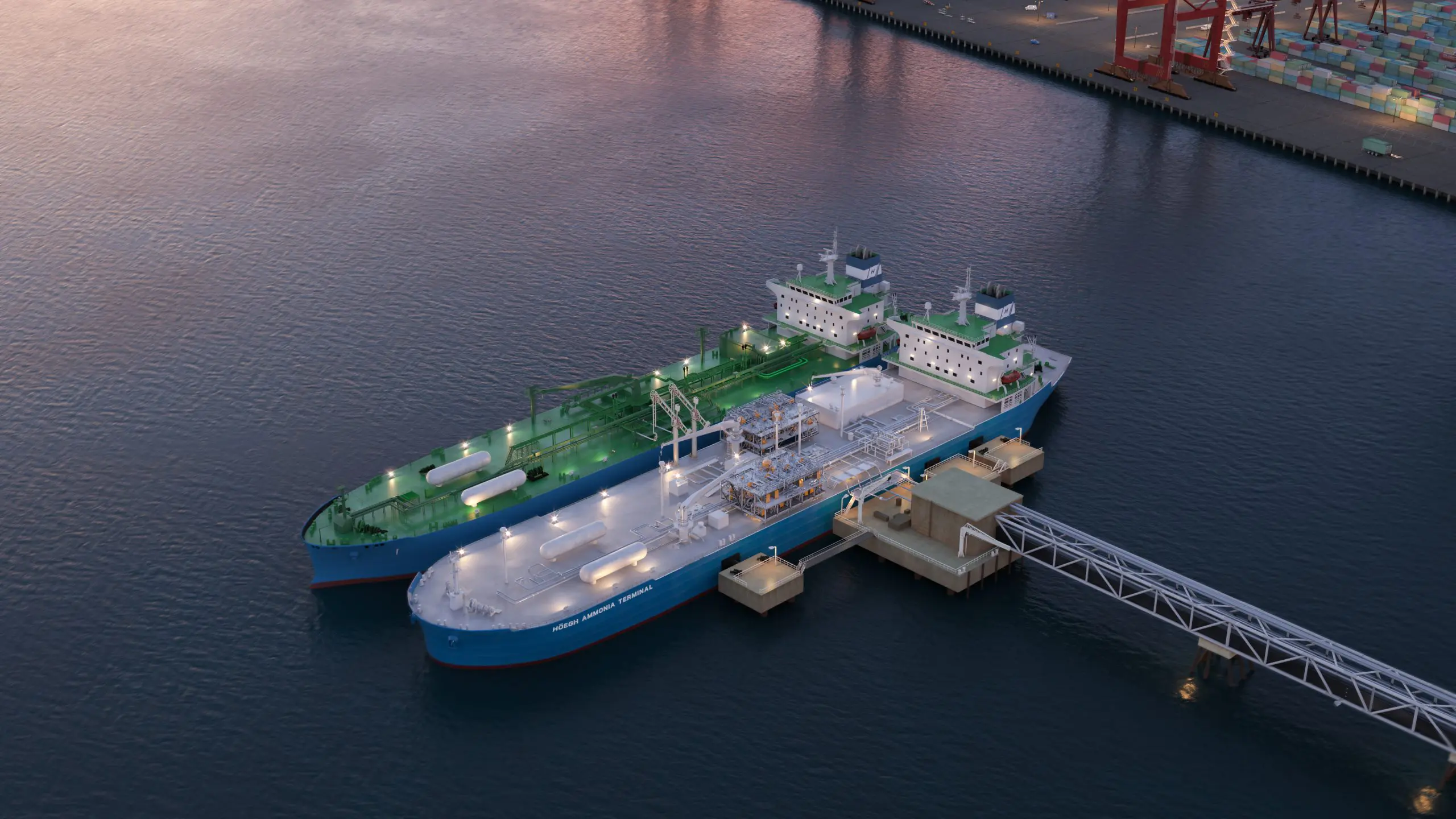
In that regard, Hoegh Evi and the port signed a memorandum of understanding for the project.
Hoegh Evi said hydrogen will be imported from producers located in the Middle East, North Africa, and the Americas.
The terminal at Port-La Nouvelle will accelerate the shift to “clean energy in Europe by becoming a vital hub for importing large volumes of hydrogen,” it said.
It will facilitate the import of up to 210,000 tonnes of hydrogen per year as early as 2030, according to the project timeline and dependent on the readiness of France’s hydrogen pipeline.
According to Hoegh Evi, the partners are now collaborating on a feasibility assessment and design of the infrastructure solution within the port.
In collaboration with European projects such as the HySoW Hydrogen and the gas pipeline operator Teréga, the floating import terminal will connect Port-La Nouvelle to major hydrogen transport infrastructures, thereby strengthening the industrial and energy attractiveness of the Occitanie region and promoting job growth, Hoegh said.
CEO Erik Nyheim said Hoegh Evi is leveraging its “extensive expertise to enable Europe to import significant volumes of clean molecules within this decade.”
“With its strategic location and well-established marine infrastructure, Port-La Nouvelle is ideally positioned to become a key entry point for hydrogen and low-carbon fuels,” he said.
Name change
In September, the FSRU player changed its name to Hoegh Evi.
Standing for “energy vector infrastructure,” the name Evi reflects the recent expansion of Hoegh’s focus beyond LNG import terminals to encompass “innovative and tangible clean energy solutions,” the company said.
Hoegh recently said its focus remains on developing a new Dutch FSRU-based facility with VTTI, while the company is working on other projects as well.
The group’s fleet comprises ten FSRUs and three LNG carriers.
Hoegh LNG’s entire fleet operates under long-term contracts, except the LNG carrier Hoegh Gandria, which is currently employed on a five-month LNGC charter ending in September 2024.
In December last year, Rotterdam-based storage terminal owner VTTI, co-owned by Vitol, IFM, and Adnoc, joined forces with Hoegh LNG to develop and operate the Zeeland energy terminal, in the Vlissingen port area, southern Netherlands.
The terminal will be based on an FSRU, which in time, plans to transition from import of LNG to hydrogen, the partners said.
Hoegh and German LNG terminal operator Deutsche ReGas recently also signed a deal to develop a floating hydrogen import terminal in the German port of Lubmin.
The partners claim this terminal will be the world’s first floating import terminal for the industrial-scale conversion of green ammonia to green hydrogen.
Deutsche ReGas expects the facility to go into operation from early 2026.