
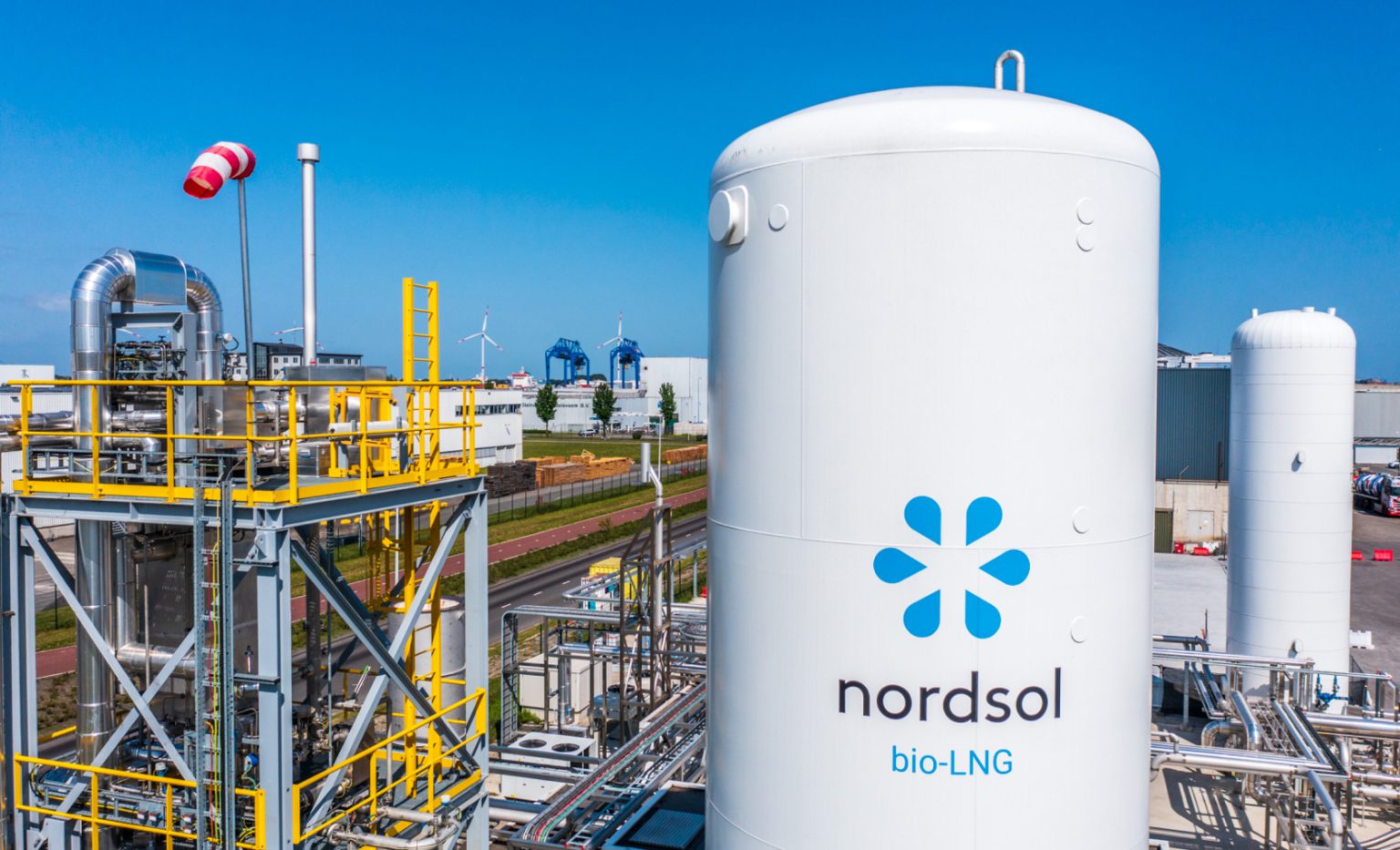
Nordsoal said on Thursday that the Swedish installation will be able to produce up to 70 GWh of bio-LNG, or LBG, per year.
At the heart of the project is a local, farmer-led initiative collecting manure from the Grastorp, Essunga, and Vara municipalities.
Together, they will produce this renewable fuel right where the feedstock is, the company said.
Moreover, Germany’s EnviTec Biogas will take care of biogas upgrading to biomethane and the Nordsol installation will liquefy this biomethane to bio-LNG.
Nordsol did not provide further details regarding the project, such as the cost.
The company said bio-LNG is “rapidly gaining momentum as a clean fuel for long-haul road transport and shipping.”
In June, Nordsol announced that the three operational bio-LNG plants in the Netherlands and the UK, which utilize its technology, have collectively surpassed the 10,000-ton mark in bio-LNG production.
The three plans include the bio-LNG plant in Amsterdam Westpoort, the first European plant using Nordsol tech, the bio-LNG plant in Wilp, and the RenEco Rushden facility in the UK.
Nordsol’s partners include Attero, Renewi, Shell, and RenEco.
In addition to these plants, Nordsol continues to expand its bio-LNG business.
Besides Sweden and Switzerland, this includes new projects underway in Portugal, Norway, Finland, and Germany, according to the firm.